
Pan Haggerty Recipe – A Traditional North East Comfort Dish
Pan Haggerty is one of those North East dishes that feels quietly important. This Pan Haggerty recipe uses nothing more than potatoes, onions and cheese, yet it has fed families across Northumberland and the wider region for generations.
Cooked slowly in one sturdy pan, it was filling, affordable food in mining towns and terrace kitchens. It was never meant to be complicated. Just steady, satisfying and made from what was already in the cupboard.
What makes it special isn’t clever ingredients. It’s the contrast. A golden, crisp base underneath soft, tender layers. Sweet onions. Melted cheese. The kind of meal that still makes sense on a cold evening.
I first made it to use up leftover roast pork, and it fitted in without ceremony. That’s the beauty of it. It’s practical. Flexible. Dependable.
It still surprises me that I lived in Newcastle for years without really coming across it. Recipes like this shouldn’t fade away. They’re too useful and too good.
Before we get cooking, let’s look at what makes Pan Haggerty a distinctively North East recipe.

What Is Pan Haggerty?
Pan Haggerty is a traditional North East potato dish made by layering sliced potatoes and onions in a heavy frying pan, adding cheese between the layers, and cooking it slowly until the base turns golden and crisp.
It isn’t baked like a traybake, and it isn’t stirred like a hash. The layers are pressed gently together as they cook, allowing the underside to form that characteristic crust while the inside becomes soft and tender.
Historically, it was everyday working food. Affordable ingredients, cooked in one pan, designed to feed a family well. Many of these dishes developed in the coal mining communities of Northumberland (you can read more about the region’s mining history at Woodhorn Museum). It was hearty enough to serve as a main meal, though it can also sit comfortably alongside sausages or other simple meats.
At its simplest, a proper Pan Haggerty relies on just potatoes, onions and cheese. Everything else is optional.
Pan Haggerty vs Panackelty (Panaculty)
Although Pan Haggerty and panackelty, sometimes spelled panaculty, are both traditional North East dishes, they’re quite different in texture and method.
Pan Haggerty is layered and cooked slowly in a frying pan until the underside forms a crisp, golden base. It’s firm enough to slice and is often made without meat.
Panackelty, by contrast, usually includes meat such as corned beef or bacon and is cooked with stock. The ingredients simmer together, creating a softer, more casserole-like dish.
Both were practical, filling meals in mining communities across the North East. The difference comes down to how they’re cooked and the texture you prefer.
If you’re after something crisp and layered, this Pan Haggerty recipe is the one to make. If you’d prefer something softer and more stew-like, you might enjoy my traditional panackelty recipe instead.
Why You’ll Love This Pan Haggerty Recipe
- Hearty enough for a main meal – filling, satisfying and made to feed a family properly.
- Simple, everyday ingredients – potatoes, onions and cheese, nothing complicated.
- Cooked in one pan – minimal washing up.
- Budget friendly – proof that comfort food doesn’t need to be expensive.
- Flexible – perfect for adding leftover roast pork or bacon if you have it.
- A North East classic that still works today – practical, dependable and full of flavour.
A note on quantities
The exact amount of potatoes you need will depend on the size of your pan. I usually slice the potatoes as I go and build the layers directly in the pan, rather than preparing everything in advance. That way, I don’t end up with leftover slices.
Two good layers of potatoes with onion and cheese between them is usually plenty. You want enough to fill the pan comfortably without it becoming too thick to cook through evenly.
Equipment You’ll Need
- A large heavy-based frying pan or cast iron skillet (around 24–28cm works well)
- A lid or sheet of foil to help the potatoes cook through
- A sharp knife for slicing the potatoes and onions
- A fish slice or spatula for lifting and checking the base
- Optional: a mandoline or food processor for even slicing
You can use a mandoline or food processor to slice the potatoes quickly and evenly if you prefer. They certainly make the job faster. That said, they weren’t exactly standard equipment in Northumberland mining cottages, and a sharp knife works perfectly well.
A note on the pan
A heavy pan makes a real difference here. It helps the potatoes cook evenly and allows that golden base to form without burning. If your pan is smaller, reduce the amount of potatoes so the layers aren’t too thick. You want the potatoes to cook through evenly.
How to Make Pan Haggerty (Step-by-Step)
Scroll down to the recipe card below for the full printable version with exact measurements.
1. Prepare the vegetables
Peel the potatoes and onions. Slice them thinly and evenly. You can use a mandoline if you like, but a sharp knife works perfectly well.
Try to keep the slices fairly uniform so they cook at the same rate.
2. Heat the pan
Place your frying pan over a gentle to medium heat and add the dripping or oil. Allow it to heat until it shimmers slightly but is not smoking.
A steady heat is important here. Too high and the base will burn before the potatoes soften.
3. Build the first layer
Add a layer of sliced potatoes to cover the base of the pan. Season well with salt and black pepper. Scatter over some of the sliced onion, then a handful of grated cheese.
Press the layer down gently with a spatula.
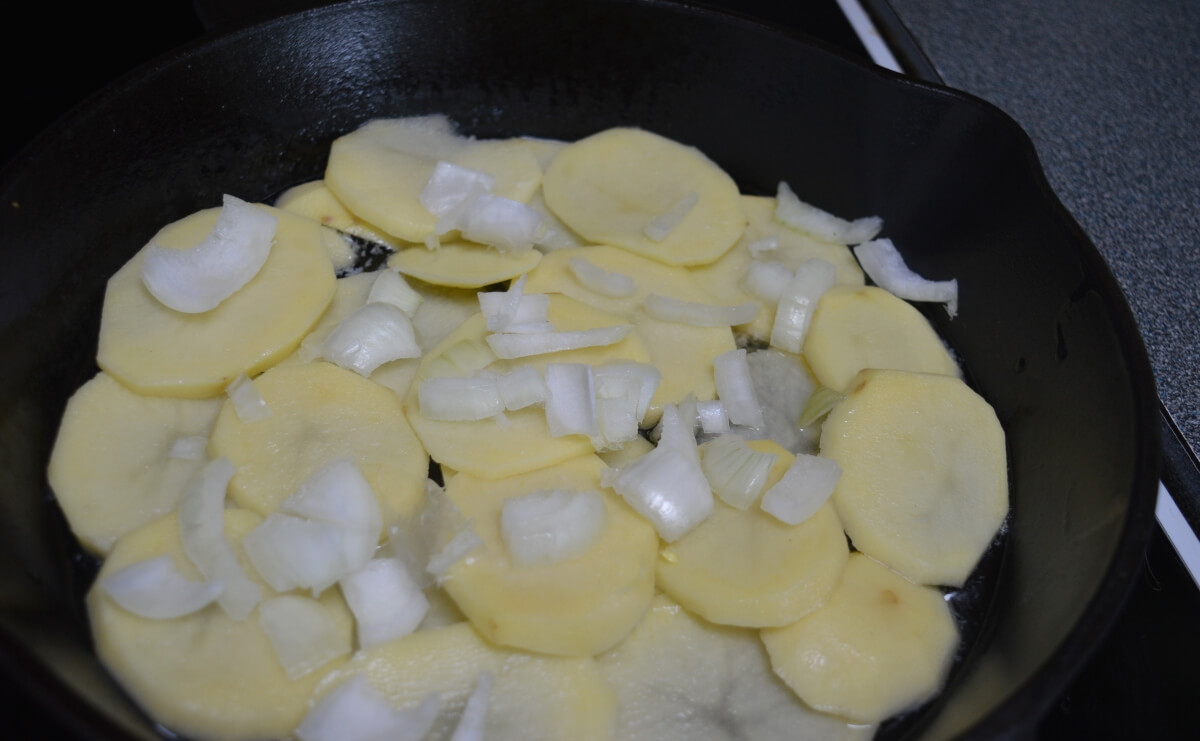
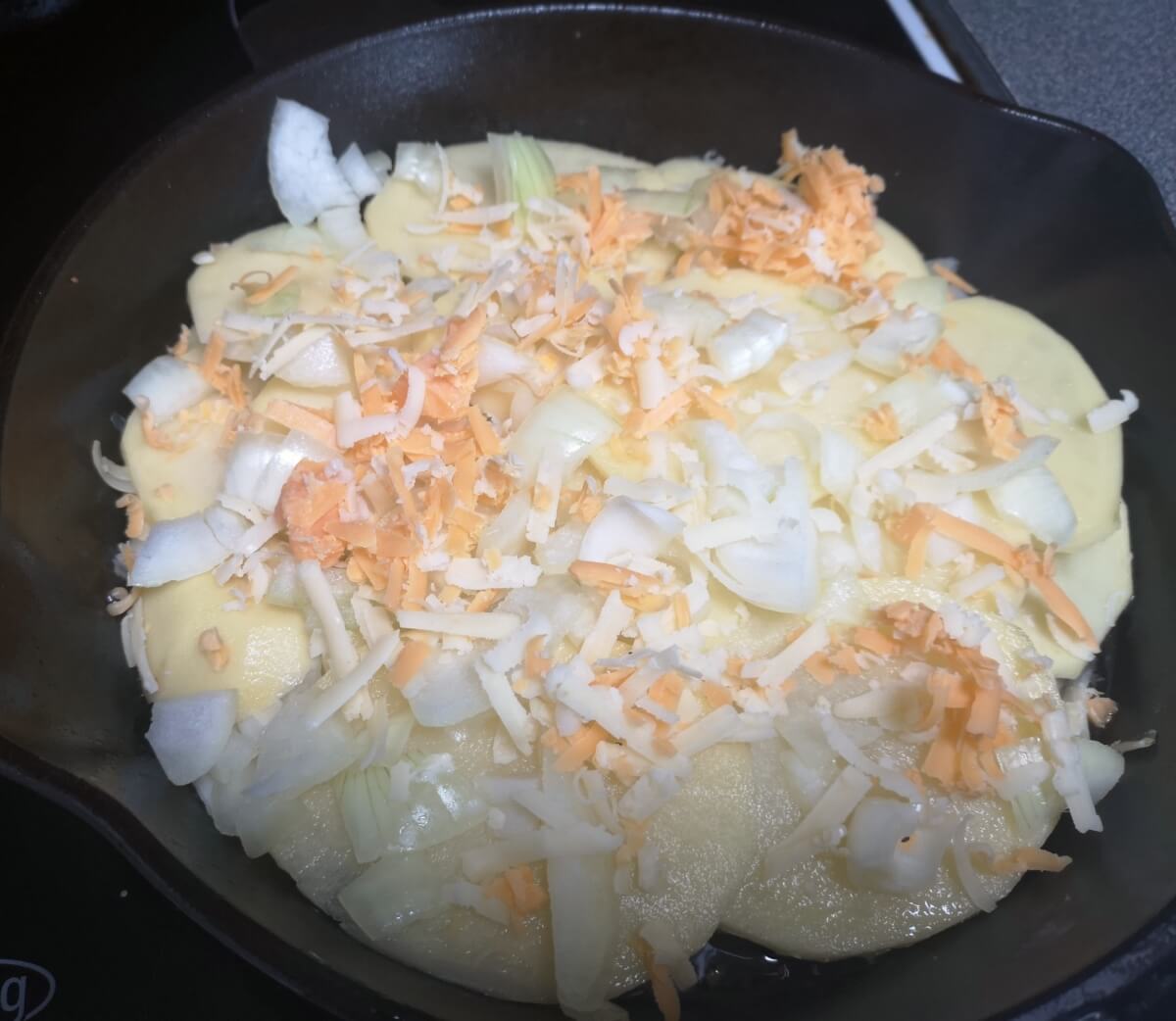
4. Add the second layer
Repeat with another layer of potatoes, seasoning again, followed by onions and the remaining cheese.
Two layers are usually enough for even cooking. Press everything down gently so it settles together.
5. Cook slowly
Cover the pan with a lid or foil and cook gently for around 25–30 minutes. Covering the pan helps the potatoes soften through properly while the base turns golden underneath.
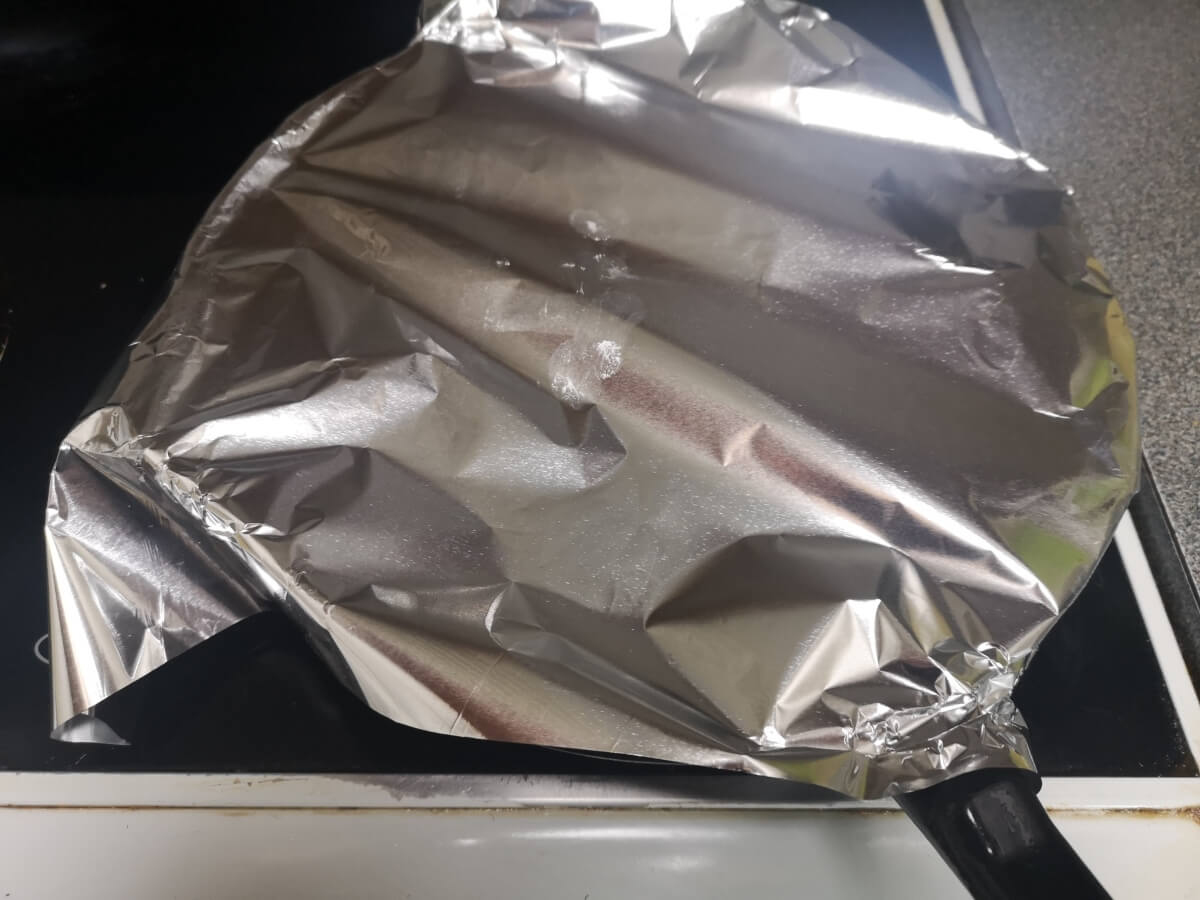
You should hear a quiet, steady sizzle. The onions will soften and the potatoes will begin to cook through. If the pan starts to crackle loudly or smell overly browned, lower the heat slightly. The aim is a golden crust, not a burnt base.
Avoid lifting the lid too often, as this lets heat escape.
6. Check the base and choose your finish
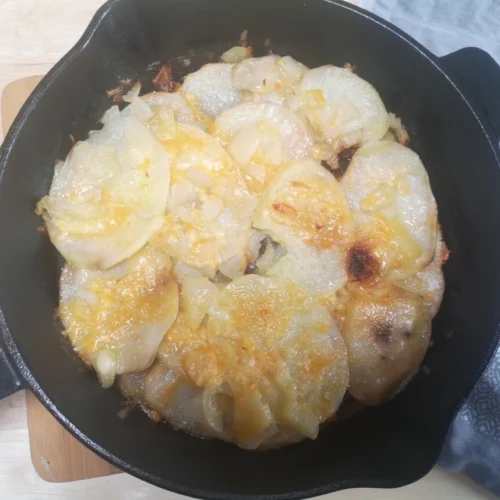
Once the potatoes are tender, carefully slide a spatula underneath to check the base. You’re looking for a deep golden crust.
At this point, you have two options:
Option 1: Finish under the grill
Place the pan under a preheated grill for a few minutes until the top is golden and bubbling.
Option 2: Flip for a fully crisp top
If you’d prefer both sides crisp, place a large plate over the pan and carefully invert it so the Pan Haggerty turns out onto the plate. Then slide it back into the pan to cook the other side for a few more minutes.
This takes a steady hand, but it gives you a beautifully crisp finish.
7. Rest and serve
Allow the Pan Haggerty to rest for a few minutes before slicing. This helps the layers settle and makes it easier to serve neatly.
Serve as a hearty main meal or alongside sausages or leftover roast meat.
Tips for the Perfect Golden Base
- Use a heavy pan – a thin pan is far more likely to catch and burn before the potatoes cook through.
- Keep the heat steady and moderate – you’re aiming for a gentle sizzle, not a fierce fry. Slow cooking allows the potatoes to soften while the underside turns evenly golden.
- Don’t rush it – lifting and checking too often interrupts the crust forming. Give it time to develop.
- Season each layer – seasoning as you build ensures the flavour runs through the whole dish, not just the top.
- Let it rest before slicing – a few minutes off the heat helps the layers settle so it holds together neatly.
How to Serve Pan Haggerty
As a Main Meal
Pan Haggerty is hearty enough to stand on its own as a satisfying main dish. A simple side is all it needs.
Try serving it with:
- Buttered cabbage or greens
- Pickled beetroot
- A lightly dressed salad
- A fried or poached egg on top
The richness of the potatoes and cheese pairs beautifully with something sharp or fresh to balance it.
As a Side Dish
Although traditionally substantial enough for a main, Pan Haggerty also works well alongside simple meats.
It pairs particularly well with:
- Sausages
- Leftover roast pork
- Grilled bacon
- A bowl of Northumberland ham broth
If you’re feeding a crowd, it’s a comforting addition to a larger spread.
Variations
While a traditional Pan Haggerty keeps things simple, it’s also a forgiving dish that adapts well to what you have to hand.
- Add leftover roast pork – tuck small pieces between the layers for extra flavour and substance.
- Include bacon or ham – cooked bacon pieces work well, especially if you’d like a slightly smokier finish.
- Try a different cheese – mature cheddar gives the best flavour, but Red Leicester or a mix of cheeses can work beautifully.
- Add fresh thyme – a light sprinkle between the layers adds a subtle warmth without overpowering the dish.
- Make it vegetarian – simply use oil or butter instead of dripping and keep to the classic potato, onion and cheese combination.
However you adapt it, the key is not to overload it. Pan Haggerty works best when the layers remain clear and the potatoes are able to cook evenly.
Storage and Reheating
To store:
Allow the Pan Haggerty to cool completely, then cover and refrigerate for up to 3 days.
To reheat:
For the best texture, reheat slices in a frying pan over a gentle heat until warmed through and crisp again underneath. You can also reheat in the oven at around 180°C (160°C fan) until hot.
Microwaving works if you’re in a hurry, but the base will lose some of its crispness.
Can you freeze it?
Yes, although the texture will soften slightly once defrosted. Freeze in portions and thaw fully before reheating gently in a pan or oven.
Frequently Asked Questions
No. Although both are traditional North East dishes, they are cooked differently. Pan Haggerty is layered and cooked until crisp underneath, while panackelty usually includes meat and stock and has a softer, more casserole-like texture.
Traditionally, Pan Haggerty was hearty enough to be served as a main meal. It can also be served as a side alongside sausages, bacon or leftover roast meat.
Floury potatoes such as Maris Piper or King Edward work best. They soften properly and help create that golden crust on the base.
It is traditionally cooked in a frying pan on the hob, which helps form the crisp underside. However, you can finish it in the oven or under the grill to brown the top once the potatoes are tender.
Keep the heat steady and moderate. You should hear a gentle sizzle, not an aggressive crackle. Using a heavy-based pan also helps prevent burning.
Yes, although the texture will be slightly softer once reheated. Reheat in a frying pan or oven to help restore some crispness.
Yes. While the traditional version is simply potatoes, onions and cheese, you can add leftover roast pork, bacon or ham between the layers if you wish.
Pan Haggerty Recipe
Pan Haggerty Recipe
Equipment
- 1 Large heavy-based frying pan or cast iron skillet
- 1 Lid or foil
- 1 Sharp knife
- 1 Spatula or fish slice
Ingredients
- 2 tbsp dripping or vegetableoil
- 900 g floury potatoes (about 5–6 medium, such as Maris Piper or King Edward)
- 250 g onions (1 large onion or 2 small)
- 200g mature cheddar cheese grated
- salt and freshly ground black pepper to season
Instructions
- Peel and thinly slice the potatoes and onions
- Heat the dripping or oil in a large heavy-based frying pan over a gentle to medium heat.
- Layer half of the potatoes in the pan and season well. Scatter over half the onions and some of the cheese. Press down gently.
- Repeat with the remaining potatoes, seasoning again, then add the remaining onions and cheese. Press gently to settle the layers.
- Cover and cook gently for 25–30 minutes until the potatoes are tender and the base is golden. Adjust the heat if needed to prevent burning.
- Finish under a preheated grill until the top is golden and bubbling, or carefully invert onto a plate and slide back into the pan to crisp the other side.
- Allow to rest for a few minutes before slicing and serving.
Notes
- Floury potatoes give the best texture.
- The exact amount of potatoes may vary depending on your pan size. Two layers are usually sufficient.
- Reheat in a frying pan to restore crispness.

FREE NORTH EAST RECIPE BOOK
Cook Like a Geordie
Love traditional North East flavours? Start cooking some of the region’s best-loved recipes. This free recipe book brings together hearty broths, comforting bakes and traditional favourites that are simple to make and full of North East flavour.
Sign up now to get your copy and start cooking like a true Geordie!
Keep North East Recipes Alive
Pan Haggerty is proof that simple ingredients can create something deeply satisfying. It’s practical, filling and rooted in North East kitchens where good food mattered more than fuss.
If you enjoy traditional North East recipes like this Pan Haggerty recipe, you might also like:
- Pease Pudding Recipe
- Northumberland Ham Broth Recipe
- Panackelty (Panaculty) – A Proper Regional Classic
You can also download a printable version of this Pan Haggerty recipe to keep in your kitchen or add to your own collection of heritage favourites.
Recipes like this deserve to be cooked, not forgotten.
If you’d like to explore more dishes, you can find every recipe organised in my full recipe index.


i never tried this recipe before but you know what i would try it again.
It was lovely, would definitely make it again
I bet my fella would love this – and I totally agree about the regional dishes, it’s a shame when any are lost or abused by other parts of the country…
I am going to have a look and see what others I can find.
I have never heard of this before, but it looks great either as a dish on its own or a side dish! Think I’ll have to give it a try!
Just popped over because I liked the look of your pan heggerty on Emily’s linky!
And I still do!!! making me feel hungry. I used to make something like this when I was a student, although I was not aware of a name for it
I was amazed I had not heard of it before, it was lovely
sounds great and very simple 🙂