Why Is There a Giant Spoon in a Field Near Cramlington?
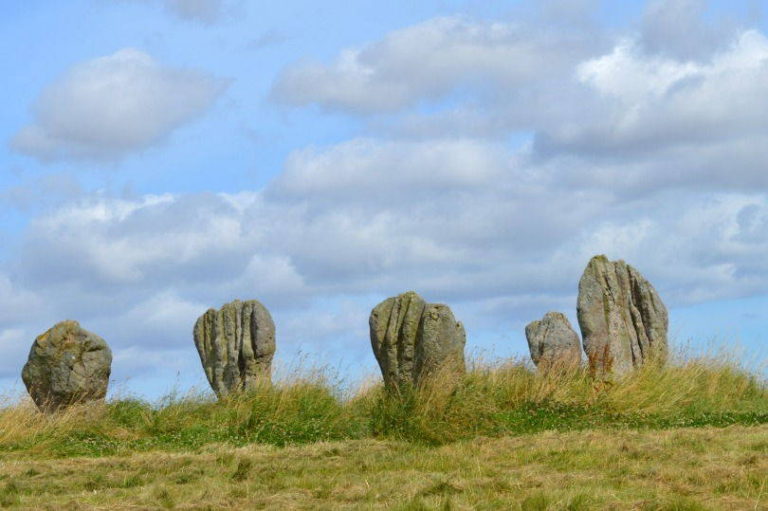
Growing up in Belfast, stories about Finn McCool were simply part of life. Everybody seemed to know about the Irish giant who, according to one old legend, scooped up an enormous handful of earth and hurled it towards Scotland. The earth landed in the Irish Sea and became the Isle of Man, while the enormous hole he left behind filled with water to become Lough Neagh.
Then, of course, there were the stories about him building the Giant’s Causeway. Finn McCool certainly kept himself busy!
So when I heard there was a giant spoon standing in a field near Cramlington, my first thought was naturally about giants. Did Northumberland have its own giant legends? Had some enormous creature simply put down his spoon and forgotten where he’d left it?
There was only one thing for it. Rob and I would have to go and investigate.
As it turned out, the spoon had a rather more modern explanation, and a fascinating story of its own. But first, we had to find it.
Our Walk to the Giant Spoon
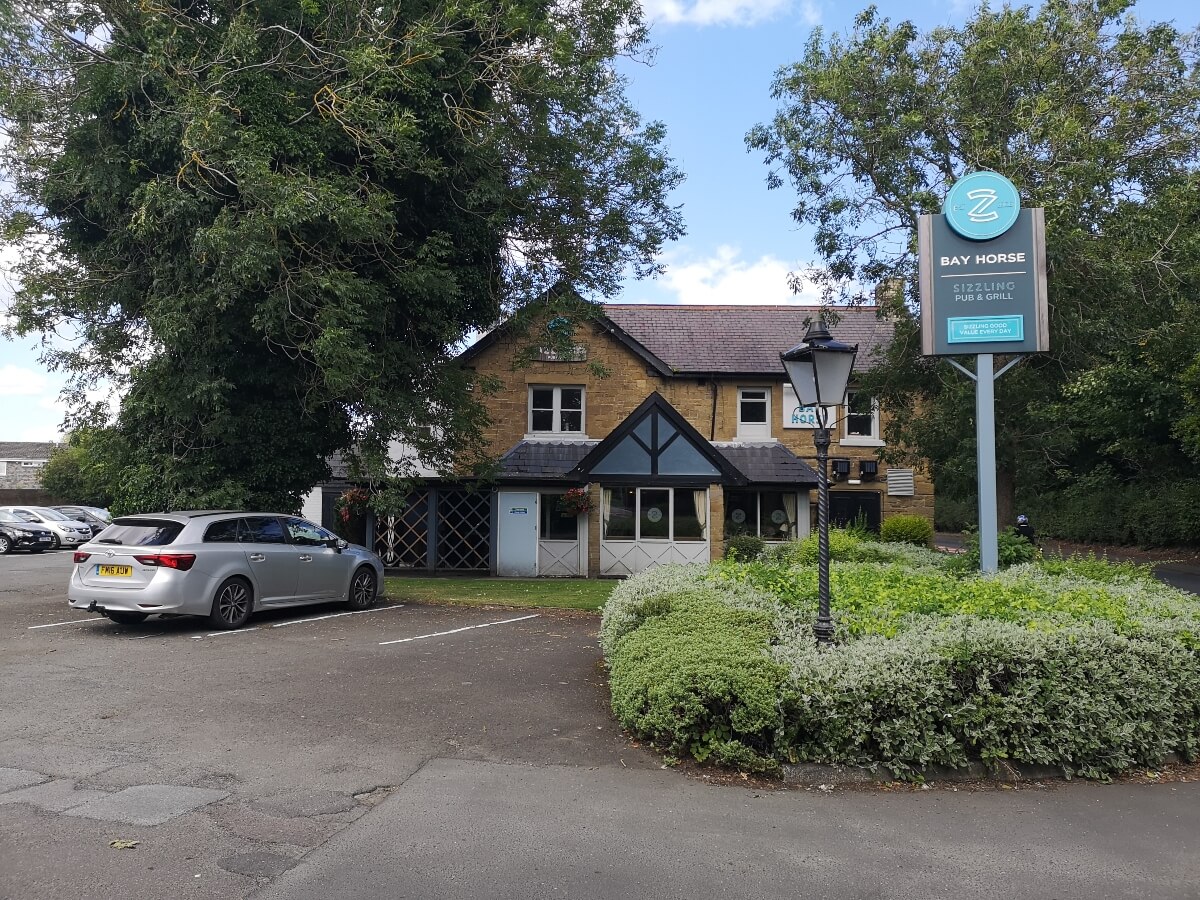
On 6 August 2024, Rob and I set off to find the Giant Spoon. We started at the Bay Horse, a pub near Cramlington, where we parked before setting off on foot.
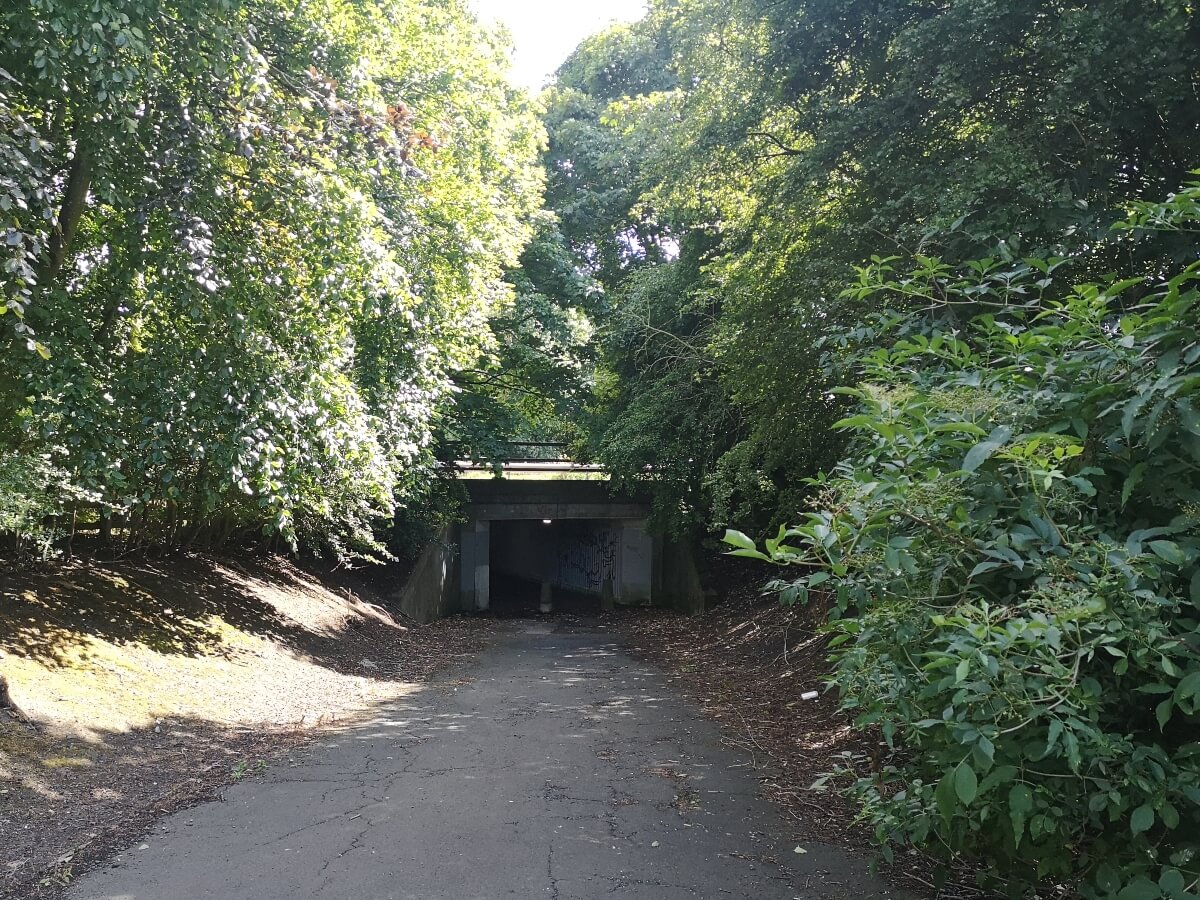
Across the road from the pub, we found a pedestrian underpass. Through we went, following the path out towards the countryside in search of our rather unusual destination.
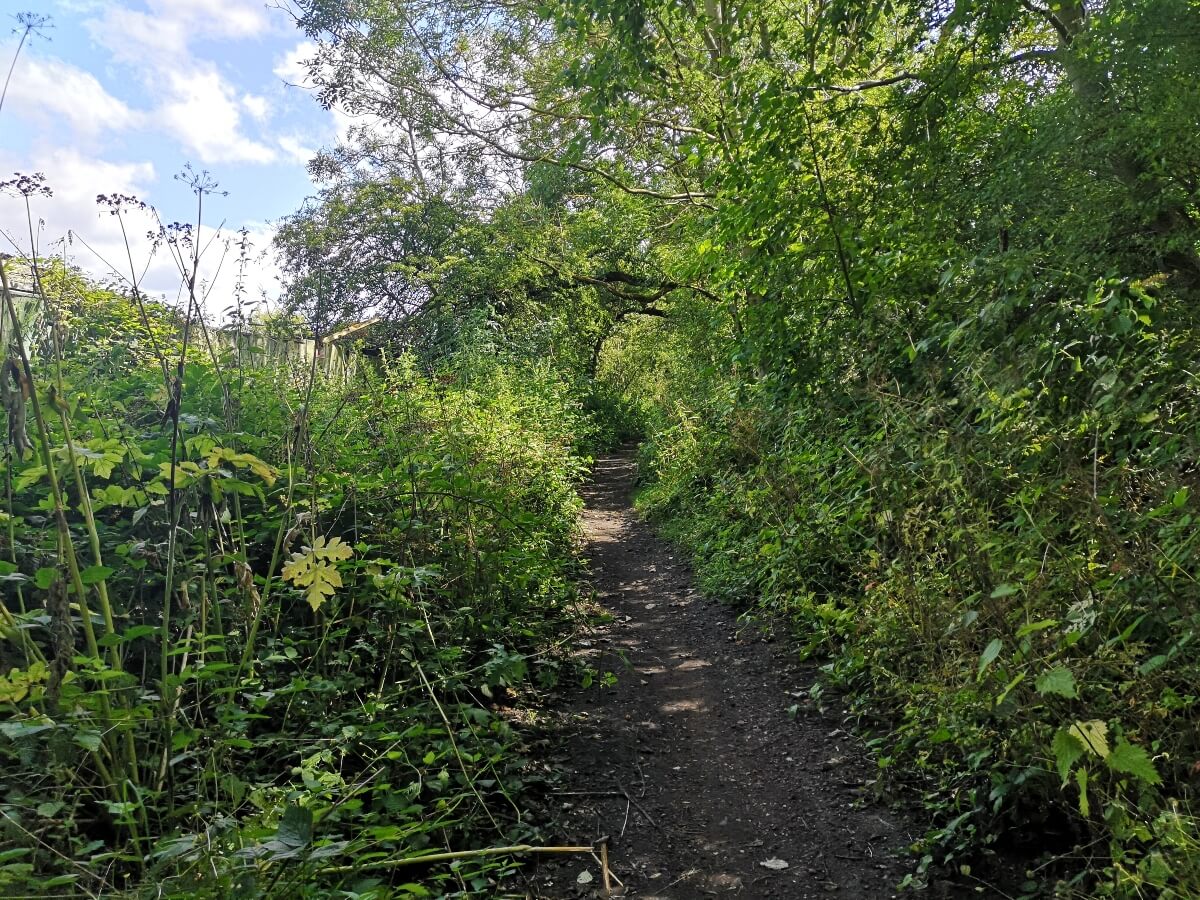
The path was quite overgrown in places, with brambles and nettles growing along the edges. Shorts probably weren’t the best choice of clothing for this particular adventure!
The ground wasn’t too bad when we visited in August, although there were still a few muddy patches. I imagine it could get rather muddy after heavy rain, so sensible walking shoes and long trousers would be a good idea.
It wasn’t exactly a well-trodden tourist trail. In fact, I was beginning to wonder whether we’d find anything at all.
After following the path towards the fields, we finally spotted something rather unexpected in the distance.
A giant spoon.
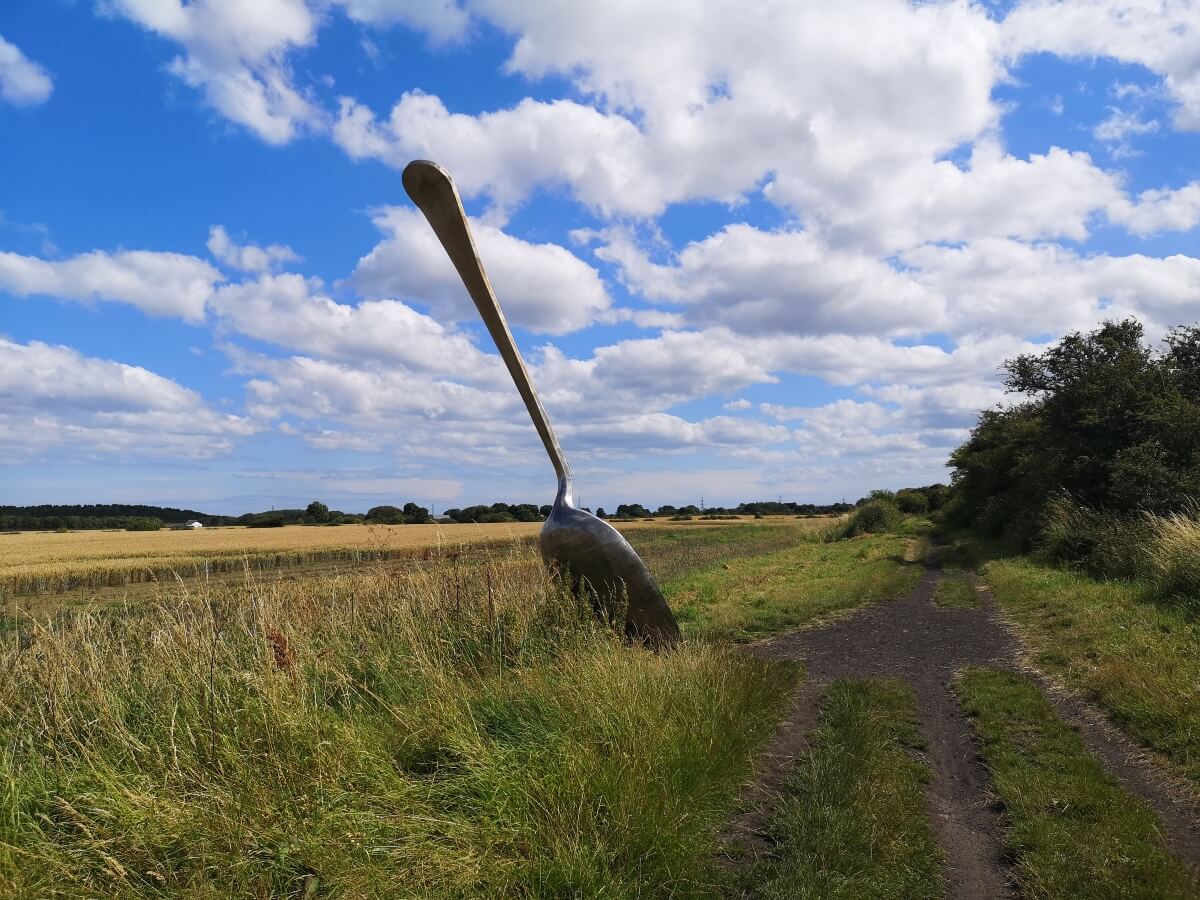
There it was, standing in the middle of a field as though someone had planted an enormous piece of cutlery and left it to grow.
We could walk right up to it, which somehow made the whole thing even more extraordinary. With the fields stretching around us and Cramlington hospital visible in the background, it was certainly an unusual sight.
I couldn’t help wondering who had decided to put a giant spoon here, of all places, and what on earth it was supposed to mean.
As we discovered later, there was a very good reason for its location.
Why Is There a Giant Spoon in the Field?
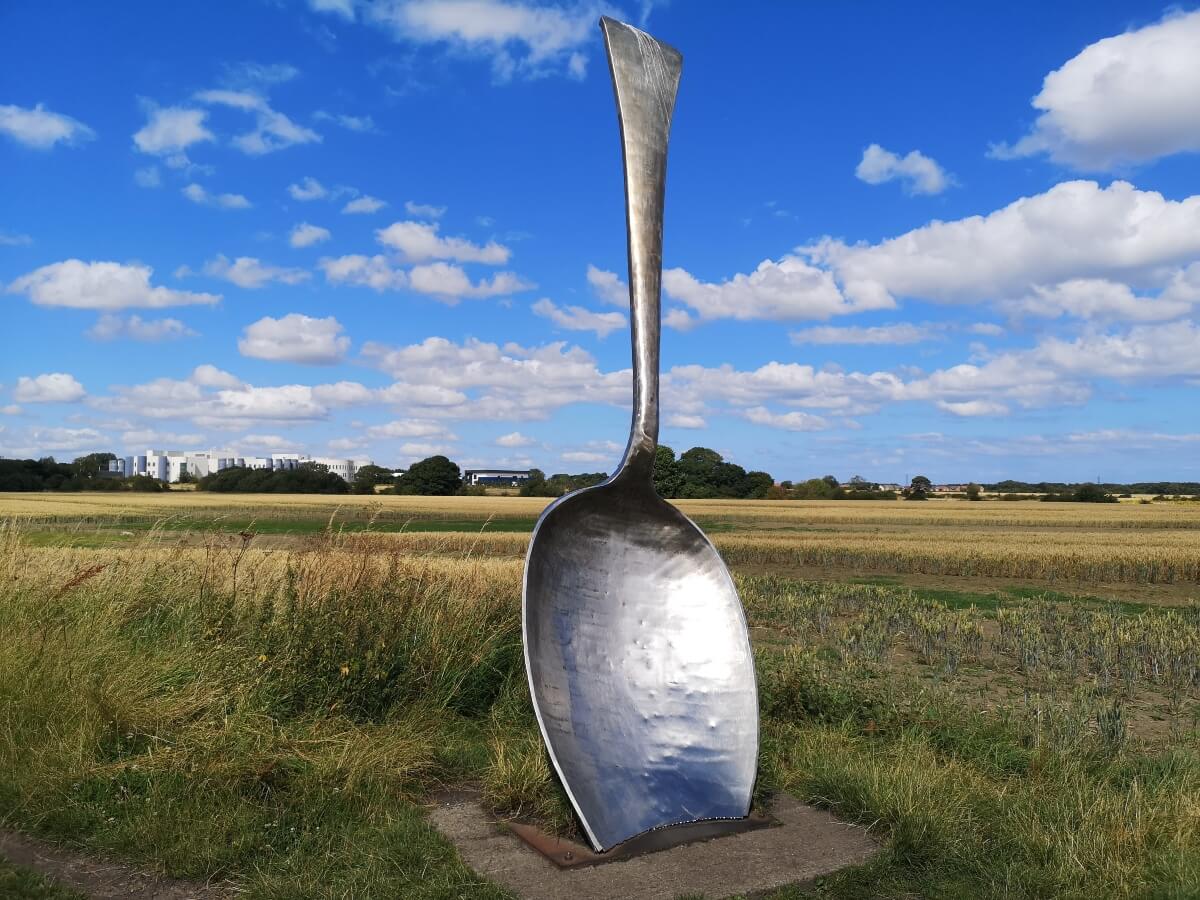
The giant spoon is actually a sculpture called Eat for England, created by artist Bob Budd as part of the Wildspace Art Trail near Cramlington.
Bob Budd has created other public artworks, including Vanishing Point at Beacon Quay in Torquay.
And, strange as it might seem, there’s a reason for putting an enormous spoon in the middle of a field.
The artwork draws on the connection between farming and the food we eat. Its title also brings to mind the wartime Dig for Victory campaign, when people were encouraged to grow their own fruit and vegetables.
It’s an interesting idea when you think about it. We use spoons every day without giving much thought to where our food comes from or the work involved in producing it. Yet here was an enormous spoon standing right in the landscape where food is grown.
I rather like that. Something that initially seems completely out of place starts to make sense when you know the story behind it.
The Wildspace Art Trail
It turns out that the Giant Spoon wasn’t the only unusual artwork created for the countryside around Cramlington.
The sculpture was part of the Wildspace Art Trail, a project designed to encourage people to explore the countryside around Cramlington and Seaton Delaval. Rather than placing sculptures in galleries or town centres, the idea was to put them along existing footpaths, tracks and bridleways, giving walkers something unexpected to discover.
The trail was developed through Inspire, a public art initiative in South East Northumberland. A report from 2005 describes plans for a circular walking route starting at Concordia Leisure Centre in Cramlington and heading towards Seaton Delaval.
The artists were invited to explore the area and come up with ideas for sculptures that would suit the landscape. The result was a collection of rather unusual artworks, each with its own character.
Other artworks associated with the trail included Capella, also known as The Shroud, by Paula Chambers, a sculpture known as the No Entry Gates, an artwork called Footprints in the Snow, and coloured lighting in an underpass called Elly Dee.
I had absolutely no idea these other sculptures existed when Rob and I went looking for the spoon. Our adventure was simply a short walk from the Bay Horse to see an enormous piece of cutlery standing in a field.
Discovering the wider trail afterwards has made me curious about what happened to the other artworks. Are they still there? Can you still find them?
It sounds like we might have another little Northumberland adventure waiting for us.
How to Find the Giant Spoon Near Cramlington
The Giant Spoon stands in a field near Cramlington, Northumberland. It’s a short countryside walk from the Bay Horse pub, where we started our visit.
Getting There
Starting point: The Bay Horse Inn, Sanderson Terrace, Cramlington, NE23 6XB.
Giant Spoon what3words: ///passes.really.clap
Google Maps: View the Giant Spoon’s location
The postcode will take you to the pub, while the what3words address and Google Maps pin identify the sculpture itself. The map pin shows the destination, not the walking route.
From the Bay Horse, cross the road to the pedestrian underpass and follow the path towards the fields. The walk is approximately 700 metres each way, returning along the same route.
Arriving by Bus
You don’t need a car to visit the Giant Spoon. The nearest bus stop is called Bay Horse, on Southfield, close to the start of the walk.
Arriva services X8 and 57A serve this stop. The X8 connects Newcastle and Blyth, while the 57A runs between Ashington and North Shields via Cramlington.
Check the latest timetables before travelling, particularly for your return journey.
Parking and Refreshments
We parked at the Bay Horse during our visit in August 2024. If you’re planning to do the same, check the pub’s current parking arrangements and ask whether you can leave your car there while walking to the sculpture.
The pub also serves food and drinks, so you could stop for something to eat before or after your walk.
What to Know Before Visiting
Wear sensible walking shoes and long trousers, as the path can be muddy and overgrown.
This is a countryside artwork rather than a formal visitor attraction, so don’t expect dedicated visitor facilities beside the sculpture.
As our visit was in August 2024, check current access and path conditions before setting off.
Make a Day of It
The Giant Spoon won’t take up your whole day, so why not combine your visit with somewhere else nearby?
If you enjoy unusual sculptures, Northumberlandia is another fascinating place to explore. Known as the Lady of the North, this enormous land sculpture has walking paths across it, so you can see the artwork from a completely different perspective.
Alternatively, you could visit Seaton Delaval Hall, a National Trust property with beautiful grounds, dramatic architecture and plenty of stories to discover.
Both are within easy driving distance of Cramlington and would make interesting additions to a day exploring this part of Northumberland. Check opening times and visitor information before setting off.
Is the Giant Spoon Worth Visiting?
If you enjoy discovering unusual places and little-known corners of Northumberland, I’d say the Giant Spoon is worth a visit.
It’s not somewhere you’d spend an entire day, but that’s part of its charm. Sometimes it’s fun to go somewhere simply because you’ve heard about something unusual and want to see it for yourself.
For us, it was the adventure of finding an enormous spoon standing in the middle of a field, then discovering there was a fascinating story behind it.
And now that I know about the other sculptures along the Wildspace Art Trail, I’m rather curious to see whether we can find them too.
After all, how often do you get to say you’ve been for a walk to see a giant spoon?
Can you help solve a little Northumberland mystery?
The Giant Spoon was once part of a wider collection of artworks hidden around the countryside near Cramlington. I’m curious to find out what happened to the others.
If you’ve come across any of the old Wildspace sculptures, or know whether they’re still there, please leave a comment. I’d love to hear what you’ve discovered!