Haunted Newcastle: A Self-Guided Ghost Walk
Haunted Newcastle is different after dark. When the nights draw in and the old buildings disappear into shadow, the familiar streets feel a little less familiar.
Every Geordie knows the city has its ghosts … but not everyone goes looking for them.
Newcastle is a city of stories, some whispered in shadow, some shouted from the battlements. There are wars and plagues, witch trials and lost souls, alongside ghost stories that have clung to these places for generations. Some have their roots in real events; others belong firmly to folklore.
This self-guided haunted Newcastle walking tour takes you through the old city to discover both. You don’t have to believe in ghosts, just bring comfortable shoes and a willingness to look a little more closely.
Many of the places on the route also feature in my guide to things to do in Newcastle. You can easily turn the ghost walk into a longer day exploring the city.
Your Haunted Newcastle Walking Route
Before we set off, here’s a Google Map of the full walking route, from the Lit & Phil to the Cooperage on the Quayside. You can open each pin for location details and walking directions.
Distance and time: The route is around 2 miles. Allow about 2 hours to follow the walk at a gentle pace, stopping to explore the stories along the way. Allow longer if you want to go inside the Castle, Cathedral or other stops on the route.
Accessibility: The route includes slopes and some uneven historic streets. The area around the Castle and Quayside is particularly steep, so check your preferred route in advance if you need step-free access.
Haunted Newcastle Walking Route
A Lit & Phil
B Tyne Theatre & Opera House
C Blackfriars
D St Andrew’s Church
E Theatre Royal
F Old George Inn
G Newcastle Cathedral & Amen Corner
H Newcastle Castle
I All Saints & Dog Bank
J The Cooperage
Tip: Look up and look closer
Take your time at each stop. Look for blue plaques, carvings, old street names and details above doorways. Newcastle hides some of its best stories in places that are easy to walk straight past.
The Lit & Phil
Begin your haunted Newcastle walk at the Literary and Philosophical Society, better known as the Lit & Phil. It’s just a few minutes’ walk from Newcastle Central Station, making it an easy place to start. Founded in 1793, it moved into its present Westgate Road home in 1825 and has been part of Newcastle’s cultural life ever since.
Step inside and it feels remarkably removed from the city outside. Books climb towards the galleries, light falls through the tall windows and, despite being only a short walk from Central Station, it can be wonderfully quiet.
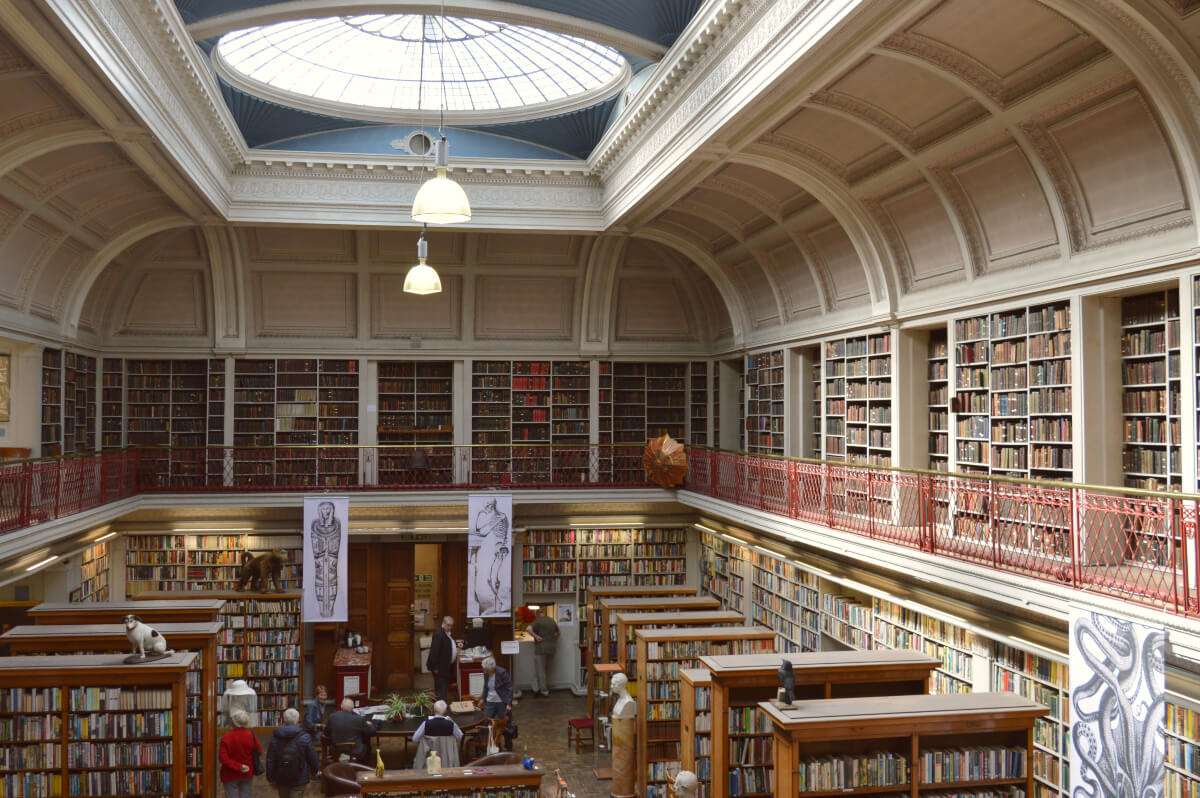
Perhaps that atmosphere explains why the Lit & Phil has gathered so many ghost stories. Local tales speak of an old librarian still wandering among the books, a young girl heard crying for her mam and even Roman soldiers beneath the building. That last story has an intriguing connection to Newcastle’s real Roman past: Hadrian’s Wall ran through this part of Newcastle.
These stories belong to the Lit & Phil’s ghost lore rather than its documented history, but they’ve become part of the tales told about one of Newcastle’s most distinctive buildings.
It’s free to go inside and have a look around, although it is a working library, so check opening times before your walk.
It’s one of my favourite Newcastle hidden gems. You can see more of the interior and discover its history in my guide to the Lit & Phil.
Continue the walk: Leave the Lit & Phil and head west along Westgate Road towards the Tyne Theatre & Opera House, around a five-minute walk away.
Tyne Theatre and Opera House
Opened in 1867, the Tyne Theatre & Opera House was created by Joseph Cowen, a Newcastle radical, newspaper owner and later MP, who believed culture should be accessible to working people. He helped finance a new theatre on Westgate Road, creating what the theatre still describes today as a “Theatre for the People.”
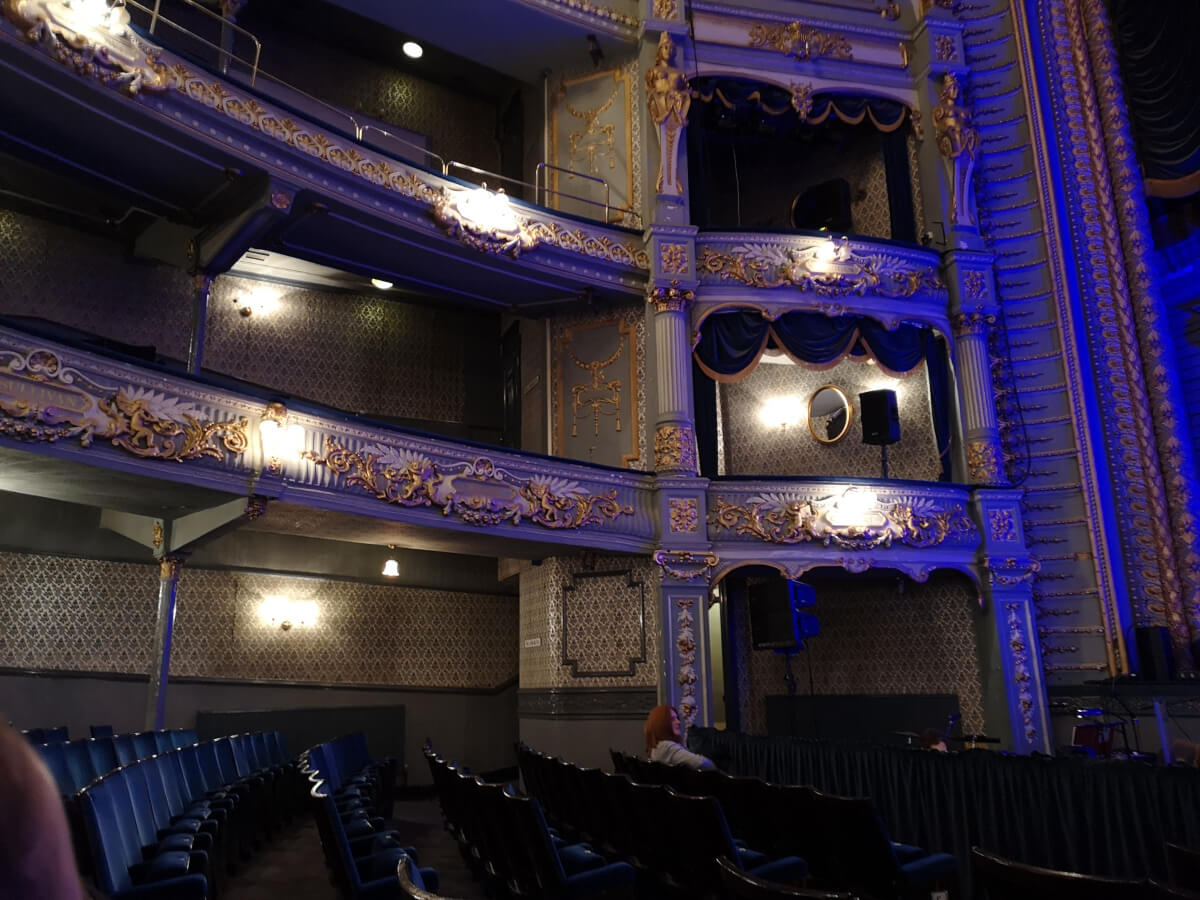
The theatre also has a darker story. On 7 April 1887, theatre staff used a 36-pound cannonball backstage to create the sound of thunder. It rolled from its position and fell about 12 feet, striking theatre employee Bob Courtenedge. He died from his injuries.
A later ghost story associated with the theatre says Bob never entirely left. His presence is sometimes said to be accompanied by the smell of tobacco. Over the years, staff, performers and visitors have also reported unexplained footsteps, strange noises and figures glimpsed around the building.
If you want to see more than the auditorium, the theatre runs guided tours on selected dates, taking visitors backstage and beneath the stage while exploring its history and ghost stories. Check the theatre’s current programme before planning your visit.
Continue the walk: From the Tyne Theatre, head towards Blackfriars, about a five-minute walk away. There are several ways through the small streets behind Westgate Road. Follow the map towards the historic friary buildings, where you’ll also find one of the surviving stretches of Newcastle’s medieval town wall.
Blackfriars
Tucked behind the modern city, Blackfriars is one of Newcastle’s remarkable medieval survivors. The Dominicans established the friary in the 13th century, and parts of the original complex still stand today alongside a surviving stretch of Newcastle’s medieval town wall.
Today, Blackfriars Restaurant occupies part of the historic complex, so this is one haunted stop where you can also sit down for something to eat.
Blackfriars has gathered plenty of ghost stories over the years. Monks and nuns are said to wander the old buildings and cloisters. Staff and visitors have also reported unexplained footsteps and other strange happenings. One of the more curious tales involves glasses and cutlery apparently rattling when nobody is near them.
If you’d like to explore Blackfriars’ history in more depth, the restaurant also runs Medieval Food & Heritage Tours. They’re part of its events programme, so check the current dates before your visit. Tours aren’t available every day.
Whether you believe the stories or not, take a moment to look around the surviving medieval buildings. With the old town wall nearby, this little corner gives you a glimpse of Newcastle long before the streets around it took their modern shape.
Continue the walk: Leave Blackfriars and make your way through Newcastle’s Chinatown. Stowell Street is lined with restaurants, and at the end of the street you’ll pass beneath the ornate Chinese Arch, complete with its dragons.
From here, continue towards Gallowgate and St Andrew’s Church. The modern city changes quickly along this short stretch, but the name Gallowgate carries a much darker reminder of Newcastle’s past. This was the route towards the Town Moor, where public executions once took place.
St Andrew’s Church and the Newcastle Witch Trials
St Andrew’s is one of the oldest churches in Newcastle. Parts of the building date back to the 12th century, and sections of Newcastle’s medieval town wall still survive beside the churchyard.
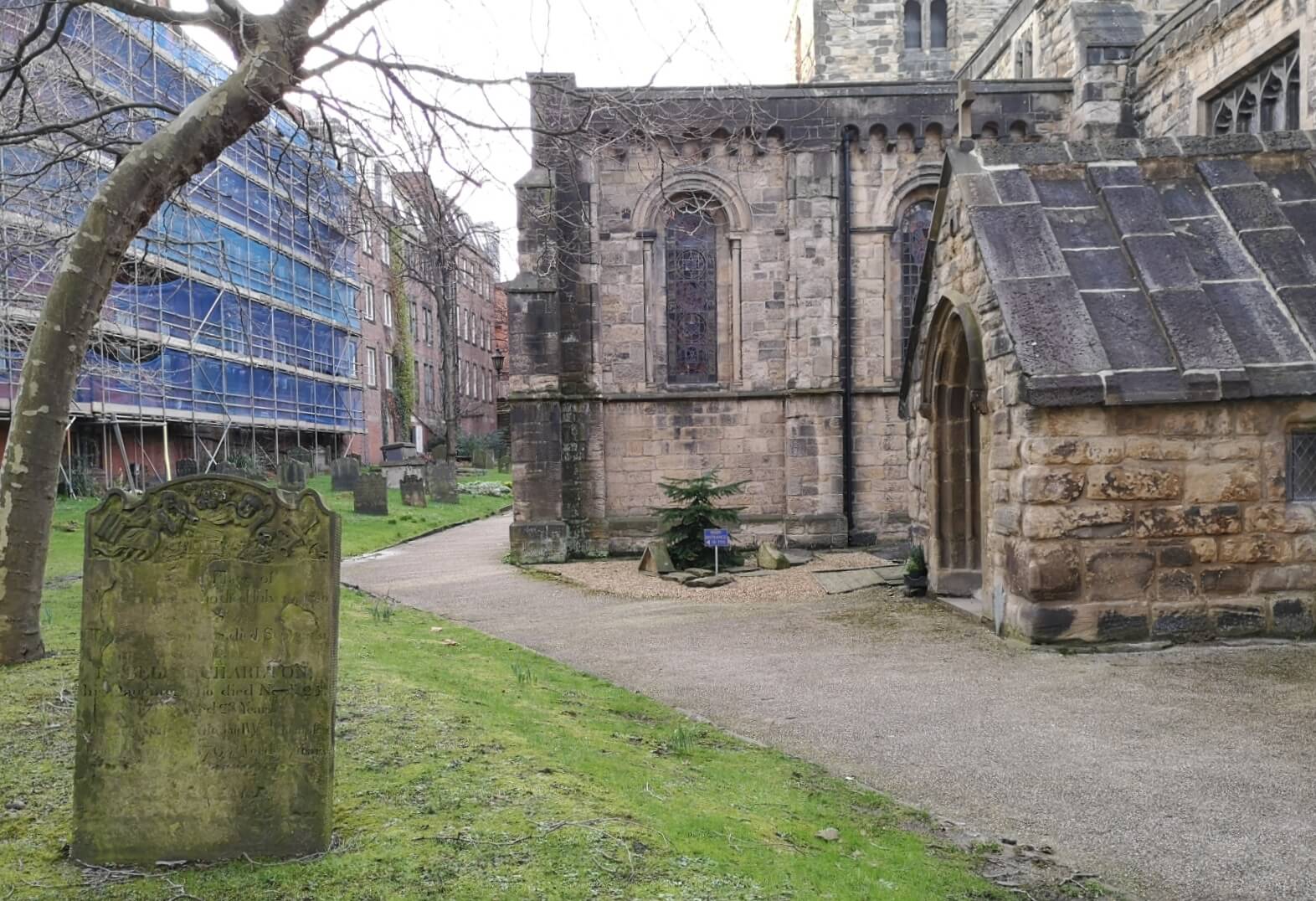
The churchyard also has a much darker story. On 21 August 1650, sixteen people were hanged for witchcraft on Newcastle’s Town Moor. Their names survive in the parish register of St Andrew’s Church, a remarkable record of one of the darkest episodes in Newcastle’s history.
A later history from Newcastle Castle says the victims were buried in unmarked graves in St Andrew’s churchyard. The story took another strange turn in 2008, when work at the church uncovered human remains. Afterwards, tales began to circulate that one of the workers had developed boils and blisters after touching the bones, and that the remains belonged to the Newcastle witches.
There is no evidence that the bones were those of the people executed in 1650, let alone that a curse was responsible. But it’s easy to see how an old churchyard, disturbed bones and Newcastle’s witch-trial history became tangled together into a modern ghost story.
Strange Newcastle
The Witchfinder Who Was Paid by Results
Newcastle’s council brought in a witchfinder from Scotland to identify suspected witches. According to a contemporary account, he was paid 20 shillings for every person he declared to be a witch.
His method involved pricking the skin with a pin. If the person bled, they were considered innocent. If they did not, they could be declared a witch.
The same account claims the witchfinder was later exposed as a fraud and executed in Scotland, although that part of the story is harder to verify.
Continue the walk: Head east through the city centre towards Grey Street and the Theatre Royal. As you approach, take a moment to look along Grey Street itself, with its elegant Georgian buildings sweeping around the curve towards the Quayside.
Theatre Royal
The Theatre Royal looks grand and golden on Grey Street, the kind of place where ghosts should feel out of place. But its history hasn’t always been quite so elegant.
The theatre moved to its present Grey Street home in 1837. In 1899, fire broke out after a performance of Macbeth and destroyed the original auditorium. Theatre architect Frank Matcham redesigned the interior, which reopened in 1901.
The Theatre Royal also has its Grey Lady. Local tradition tells of a woman carrying a candle through the theatre, sometimes accompanied by the sound of weeping or sighing. One version of the story says she fell in love with an actor who betrayed her.
Nobody seems to know who the Grey Lady really was, or whether there was ever a real woman behind the story. But she has become part of the Theatre Royal’s folklore, still said to wander the building long after the audience has gone home.
The Old George Inn
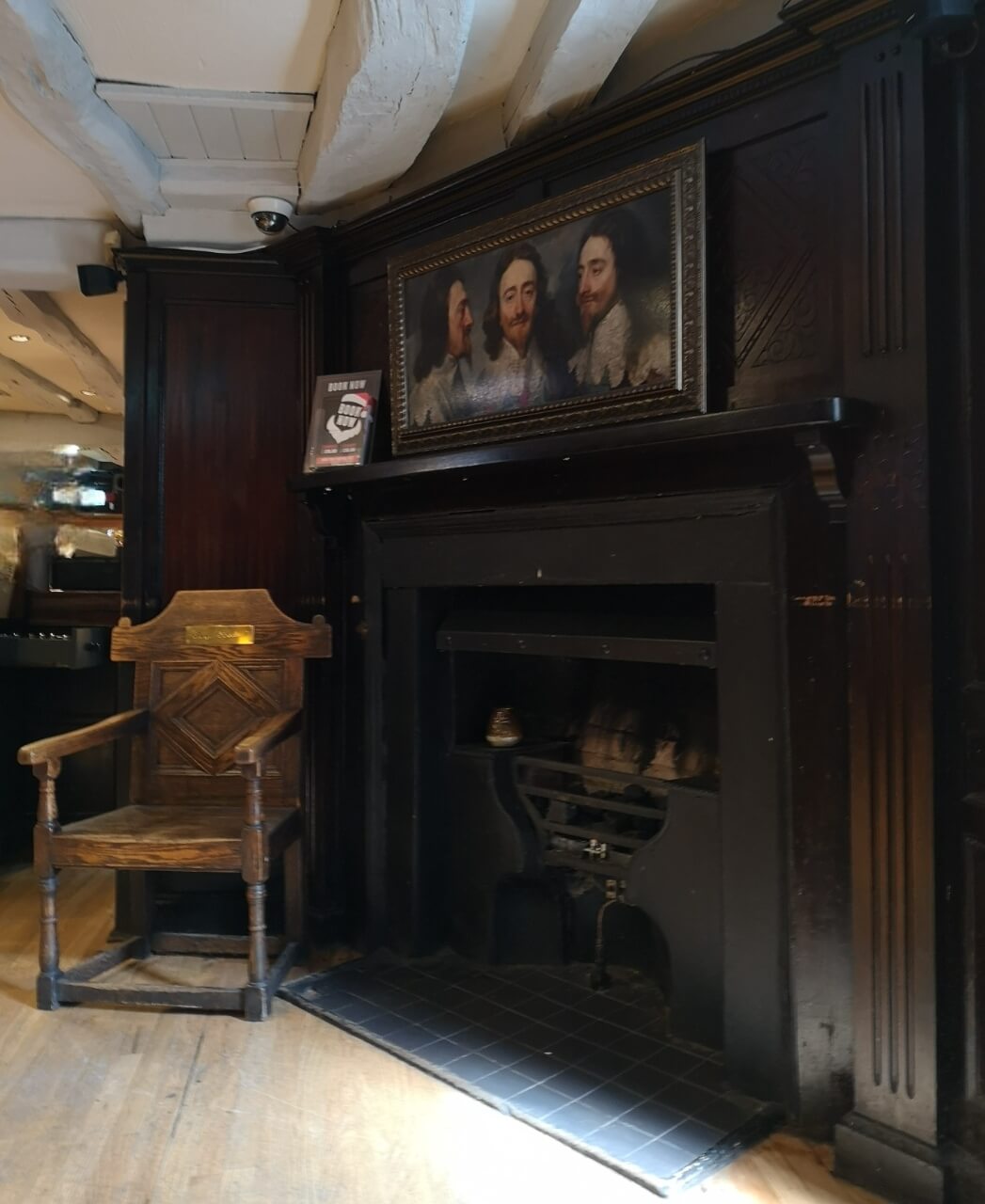
The Old George Inn
Whether Charles really returned to haunt his favourite chair is another matter, but the Old George is still a working pub, so this is one stop where you can go inside, have a drink and look for yourself.
In the Cloth Market, the Old George is one of those places where Newcastle history and pub folklore have become thoroughly tangled together.
Charles I is said to have drunk here in 1646, while he was being held in Newcastle by the Scots. The Charles I Room still contains a chair associated with his visit, and over the years it has acquired a ghost story of its own.
Visitors have reported seeing a figure sitting in the chair, while other tales tell of unexplained footsteps in the closed bar and the ghostly figure of a man accompanied by a dog.
Continue the walk: From the Bigg Market, head towards Newcastle Cathedral and Amen Corner.
Newcastle Cathedral and Amen Corner
Newcastle Cathedral has stood at the heart of the old city for more than 900 years. Originally the Parish Church of St Nicholas, the first church probably appeared here around 1180. The larger medieval stone church followed between 1275 and 1359.
The distinctive Lantern Tower followed in 1448 and later became a familiar landmark for people approaching Newcastle, including sailors on the Tyne. St Nicholas’ spire stretches against the night, a dark finger pointing to the past.
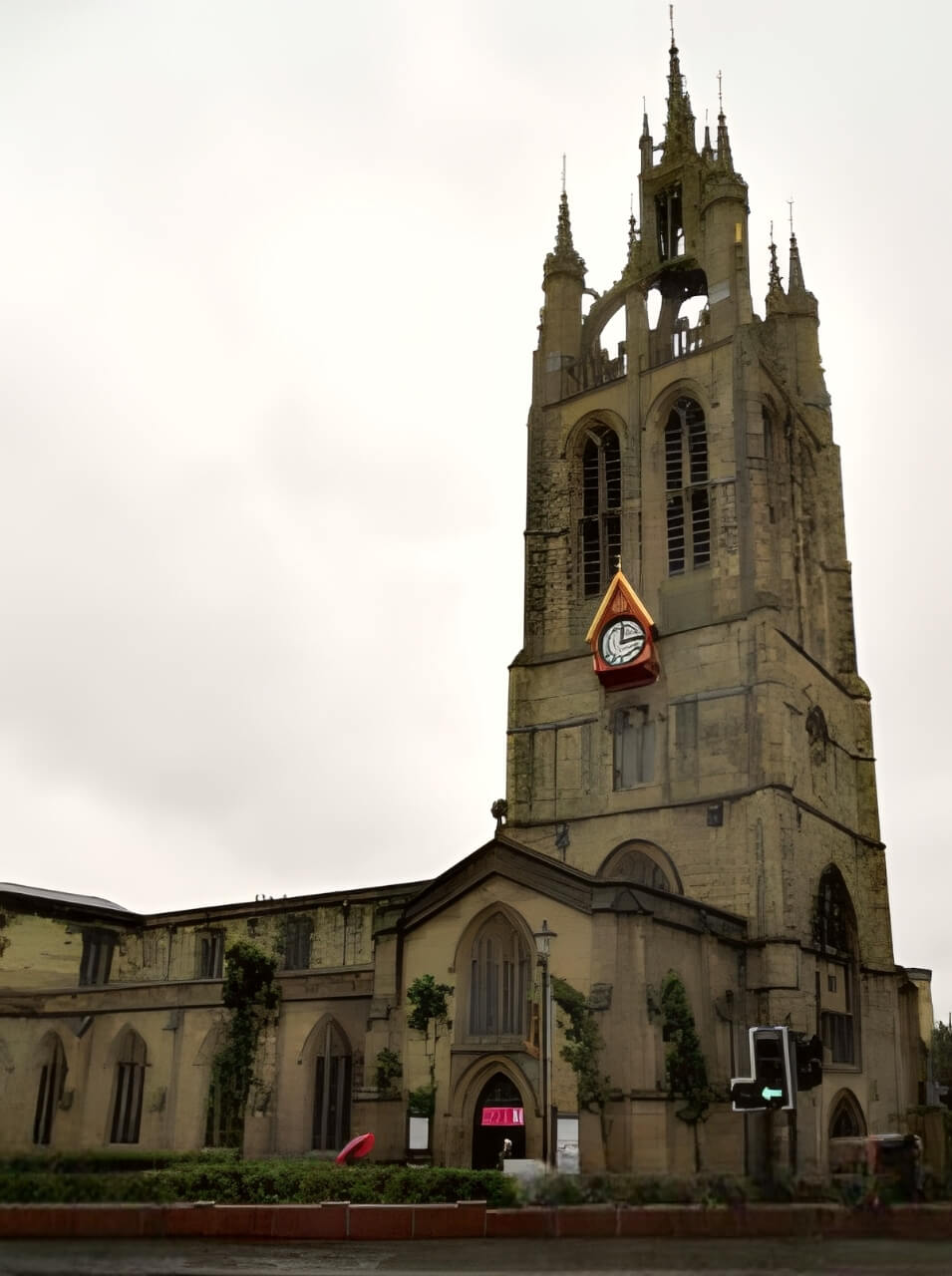
Don’t hurry straight past. Walk around the Cathedral and its churchyard, where old street names, archaeology and ghost stories preserve glimpses of a much older Newcastle.
One of those stories concerns Martha Williams, whose ghost is said to haunt the churchyard. Local tradition says she was murdered here by two grave robbers and can still sometimes be seen among the graves.
Amen Corner has produced something rather more tangible. In 1985, work nearby uncovered a human skeleton about four and a half feet below ground. Police forensic tests at the time concluded that the remains were between 100 and 200 years old.
Strange Newcastle
Rat’s Row
The lane along the north side of the medieval churchyard once had the wonderfully unappealing name Rat’s Row.
Medieval records preserve several versions of it, including Ratunrau, Ratounrawe and Rattenrawe. It’s a tiny surviving clue to the streets that once surrounded St Nicholas’ Church.
Look up and look closer
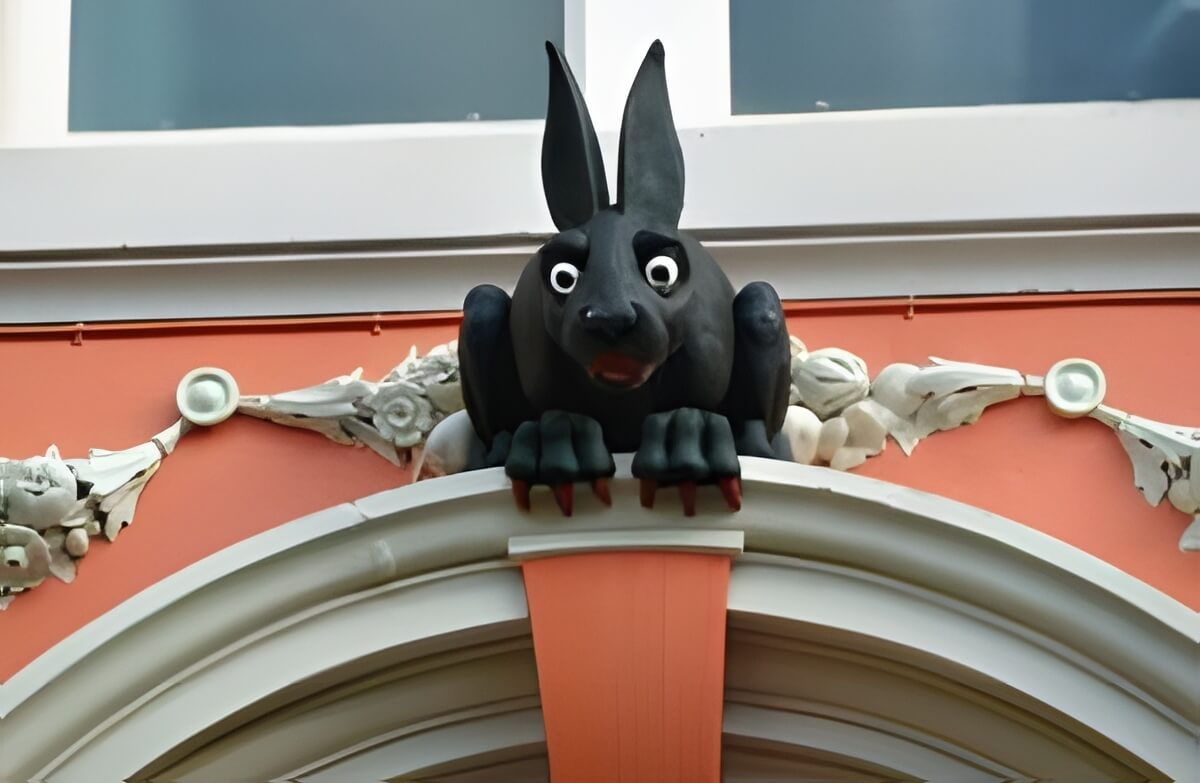
Can you spot the Vampire Rabbit? Before you leave the Cathedral, walk around to the back of the building. Look up and you’ll find one of Newcastle’s strangest little creatures crouching above a doorway: a stone rabbit with long ears, claws and distinctly fang-like teeth.
Nobody knows for certain why it’s there, although that hasn’t stopped Newcastle collecting theories about it.
I’ve explored its peculiar story in my guide to the Vampire Rabbit.
I’ve written before about the Cathedral’s history and quiet beauty — take a look at St Nicolas Cathedral.
Continue the walk: From the Cathedral, head towards Newcastle Castle and the Black Gate, just a short walk away. Take a moment to look around when you arrive. The Moot Hall, Bridge Hotel and Vermont Hotel sit around the Castle, with the High Level Bridge stretching away behind them. It’s one of those corners where Newcastle’s different layers seem to pile up on top of one another.
By the time you reach the Castle, you’re deep in Newcastle’s oldest streets.
Castle Keep and Black Gate
By the time you reach the Castle, you’re deep in Newcastle’s oldest streets. Newcastle Castle isn’t just at the heart of the city; it’s the place that gave Newcastle its name.
The stone castle we see today stands on a site that had already been important for centuries. The Romans built the fort of Pons Aelius here, and Henry II rebuilt the Norman castle in stone between 1168 and 1178. The Keep and Black Gate are among the surviving parts of that medieval stronghold.
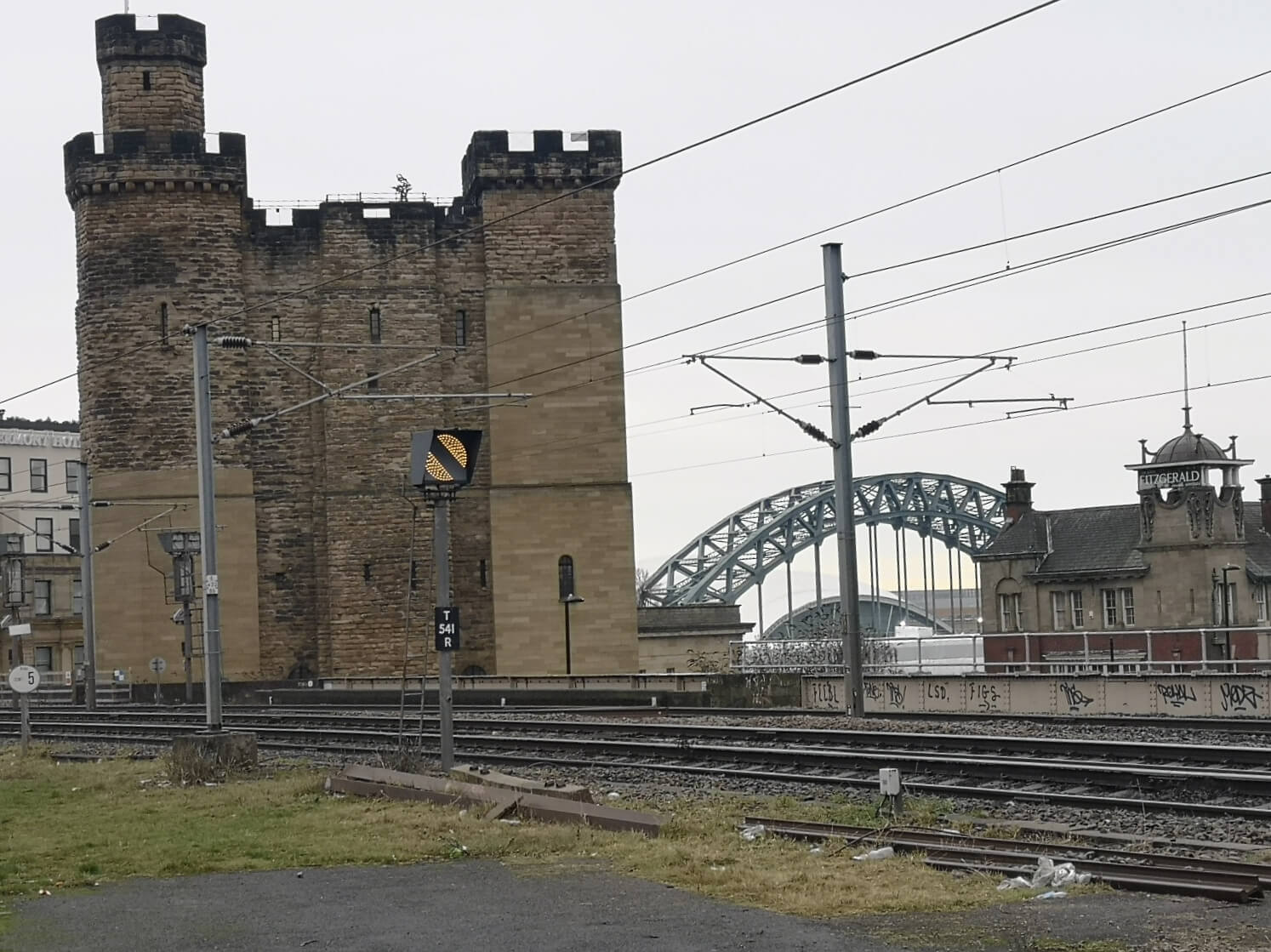
With that much history packed inside its walls, perhaps it isn’t surprising that the Castle has gathered plenty of ghost stories too. Visitors and paranormal investigators have reported strange figures, unexplained voices and sudden changes in atmosphere. Among the stories told about the Keep are a ginger-haired boy in the garrison room, a soldier in the Queen’s Chamber and darker figures seen around the chapel and passageways.
Newcastle Castle itself acknowledges these stories as part of the building’s folklore, while making the rather important point that nobody has proved there are ghosts here.
There is an admission charge to enter the Castle, but you can see the Keep and Black Gate from outside as part of the walk. If you do go in, take time to climb to the roof. The views across Newcastle are worth it, and they give you a much better sense of how this fortress once dominated the town below.
Learn more about the site’s origins at the official Newcastle Castle history page.
You can read more about my visit in A Visit to Newcastle Castle
Strange Newcastle
The Flying Donkey
In 1733, a performer known as a “Flying Man” descended from Newcastle Castle using a rope, rather like an eighteenth-century zipline. Then someone decided his donkey should have a go.
The animal survived, but tragically a girl in the crowd was killed. As the story was retold over the years, the donkey acquired wings and became one of Newcastle Castle’s stranger legends.
Continue the walk: Leave the Castle and follow Castle Garth towards All Saints and Dog Bank, where the old streets begin to fall towards the Quayside.
All Saints Church and Dog Bank
All Saints is easy to recognise once you know what you’re looking for. Newcastle architect David Stephenson designed the church, which was built between 1786 and 1796. It is the only elliptical church in England.
The church may be Georgian, but Dog Bank beside it takes us much further back. This little street follows a medieval route around the southern edge of the old churchyard, leading towards the steep streets that fall away to the Quayside.
Dog Bank also had a rather unusual resident. In the early 19th century, John “Black Jackey” Johnson, also known as Black Jock, lived here and developed a reputation as a wizard and sorcerer.
People reportedly came to him for help with stolen property, curses, love problems and other troubles. His tools were said to include cards, a mirror and a book of magic
Continue the walk: From Dog Bank, follow the old streets towards the river. Watch for glimpses of the Tyne bridges between the buildings as you descend. As you approach the Cooperage, look for the Long Stairs, an old stone stairway leading down towards the Quayside beside the building. Film fans might recognise them from the 1971 Newcastle crime film Get Carter, starring Michael Caine.
The Cooperage
The Cooperage makes a fitting final stop on our haunted Newcastle walk. Standing on The Close near the Long Stairs, the building itself is a remarkable survivor from an older Newcastle.
A building has stood here since around 1430, originally used as a merchant’s house. In the late 19th century it became home to John Arthur’s coopering business, where coopers made barrels until the business moved out of the city centre in the 1970s. It later became the Cooperage pub, remembered by generations of Newcastle drinkers, before finally closing in 2009.
It is a remarkable piece of Newcastle’s history, which makes its present condition particularly sad. One of the city’s oldest surviving buildings has been standing empty for years, slowly deteriorating while its future remains uncertain. For a building that has survived almost six centuries of change on the Quayside, it deserves better than being allowed to decay.
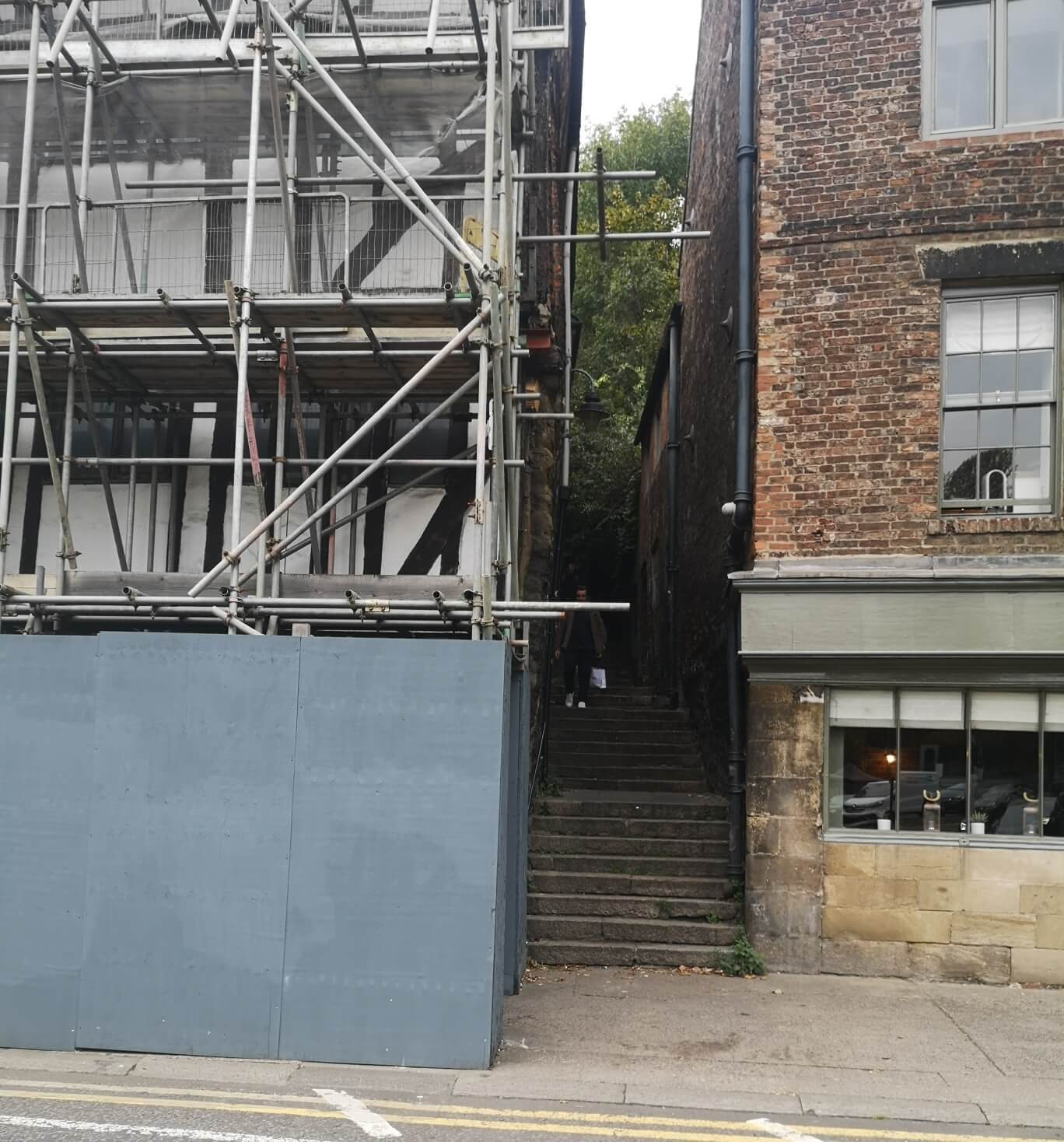
And, of course, a building this old has collected its ghosts.
One of the best-known stories concerns Henry Hardwick, a sailor said to have been attacked and killed by a press gang. According to the legend, his ghost still wanders around the Cooperage and the nearby Long Stairs.
Other stories tell of unexplained footsteps and shadowy figures inside the old building. There are also tales of a pale young girl seen watching from an upstairs window, long after the building had fallen empty.
Today the Cooperage is closed to the public, so admire it from the street rather than trying to go inside.
After the Walk: Stay on the Quayside
Don’t rush away when you reach the end of the walk. By now you’ve earned something to eat, and the Quayside gives you plenty of reasons to linger, from the bridges and river views to pubs, cafés and restaurants.
For tea, cake and feline company, try CatPawCino Cat Cafe. If you fancy a traditional pub meal, The Broad Chare is nearby. For something quick and casual, there’s I Scream For Pizza, while The Quayside – JD Wetherspoon is a useful option if you’re looking for a cheaper pub meal.
Check current opening times before you visit, particularly if you’re doing the ghost walk later in the evening.
Afterwards, take a wander along the river for views of the Tyne Bridge and Millennium Bridge, before making your way back towards Central Station.
Want More Haunted Newcastle?
If ten haunted stops haven’t quite satisfied you, there’s another side of Newcastle waiting underground.
The Victoria Tunnel runs beneath the city from the Town Moor towards the Ouseburn. Built in the 19th century to carry coal, the tunnel later became an air-raid shelter during the Second World War. Today you can explore part of it on a guided tour, and naturally, a tunnel beneath Newcastle has gathered a few ghost stories of its own.
It’s away from this walking route, so treat it as a separate adventure rather than an extra stop. Check current tour availability before visiting.
Walk with the Ghosts
Newcastle’s ghost stories aren’t separate from the city. They’re tangled through its castles and churches, theatres and pubs, medieval streets and quiet corners.
Some grew from real tragedies. Others have been passed from person to person until it’s difficult to know where history ends and folklore begins. And some are simply very good stories.
You don’t have to believe in ghosts to enjoy this walk. Follow the route slowly, look up and look closer, and you’ll discover a Newcastle that’s very easy to miss when you’re hurrying through the city.
If you follow the walk, I’d love to know what you discover. You can find me on Instagram at @fairydust_dragon and share your photographs with #HauntedNewcastleWalk.
And if you hear footsteps behind you on the Long Stairs…
Well, perhaps don’t look back too quickly.