
Things to Do in Blanchland: A Historic Northumberland Village
Blanchland is one of those Northumberland villages where there’s far more to discover than you might expect. Behind the stone houses and quiet village square are the remains of a medieval abbey, while the surrounding North Pennines landscape holds traces of lead mining, old packhorse routes and miles of walking country.
We went to Blanchland for a Father’s Day dinner at the Lord Crewe Arms, but quickly discovered that the village deserved much more of our time. Here’s what we found, what to look out for and a few things I wish we’d known before we went.
How We Finally Made It to Blanchland
Blanchland had been sitting quietly on my list of places to visit for a while. I first heard about it at Living North LIVE, where I watched a chef from the Lord Crewe Arms cook pan-roasted John Dory with crab cake, sea beet and crab sauce. We got to taste the food afterwards, and somewhere between the demonstration and hearing about the hotel, Blanchland lodged itself in my head as somewhere I wanted to see.
It was my son who finally got us there. For Father’s Day, he booked dinner at the Lord Crewe Arms as a treat, giving us an excellent excuse to make the journey.
We arrived rather too early for dinner, so after discovering the restaurant didn’t open until 6pm, we headed off for a while before returning later. This time we parked behind the Lord Crewe Arms and walked through the hotel garden into the village.
At the time, I thought it was simply a lovely way to arrive.
It was only later, when I started digging into Blanchland’s history, that I discovered the lawn we’d walked across marks the site of the medieval canons’ cloister.
And that turned out to be rather typical of Blanchland. What looks at first like a small, beautiful Northumberland village has fragments of its much older story hiding all around you.
Exploring Blanchland Village
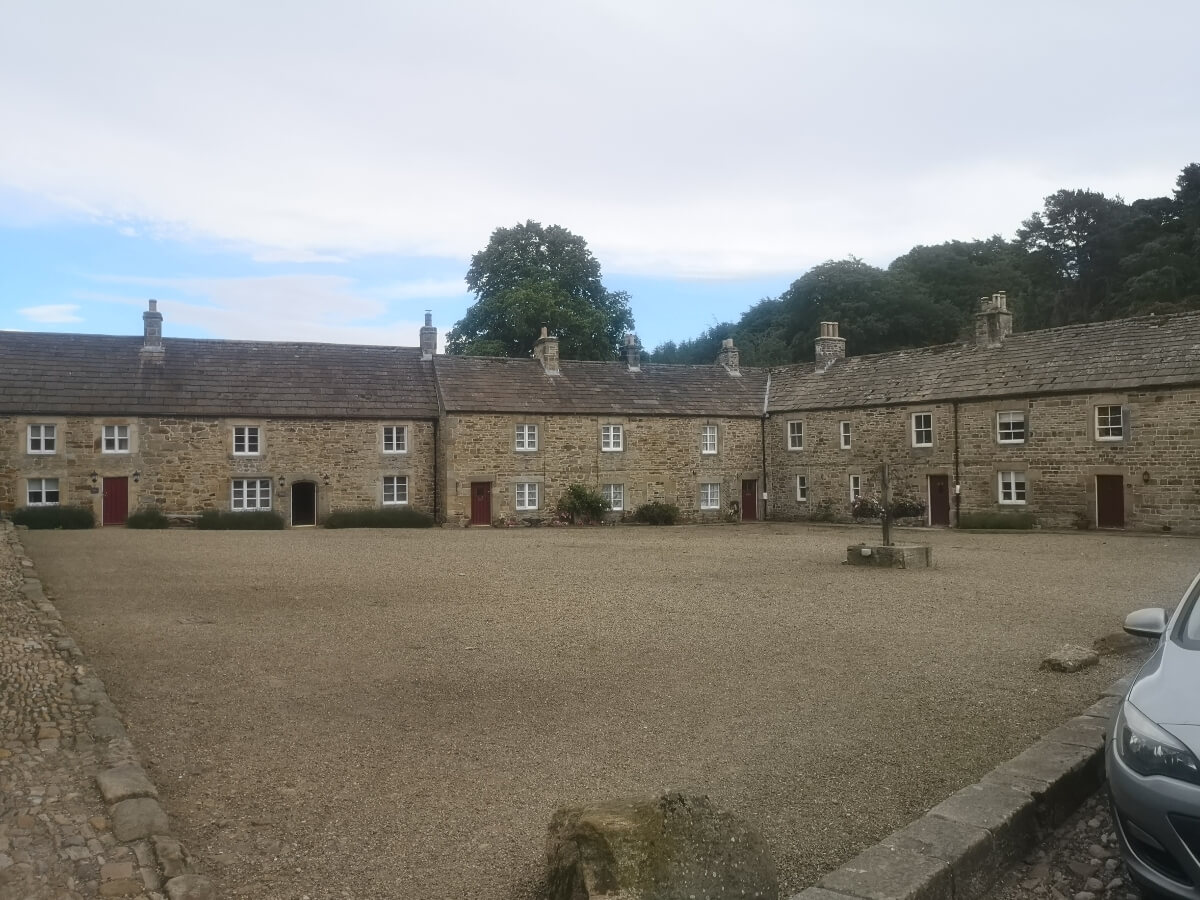
Blanchland is small enough to explore on foot, but don’t be too quick to wander through. The stone houses around the village square may look as though they’ve simply grown old together, but there is much more history hiding among them.
Much of the village was built using stone quarried locally, including the traditional stone roof slates. That helps give Blanchland the remarkably harmonious appearance you see today.
But the square itself is much older than the houses surrounding it might suggest. It occupies the outer court of medieval Blanchland Abbey, once a busy working area supporting the small community of canons who lived here.
Once you know that, the village starts to look rather different.
The old abbey gatehouse still survives on the northern side of the square, while the church and parts of the Lord Crewe Arms preserve more pieces of the medieval layout. What initially looks like a particularly pretty Northumberland village is, in places, still following a plan laid out centuries ago.
Blanchland Abbey and the White Canons
Blanchland’s story as an abbey began in 1165, when Walter de Bolbec III granted land here to a community of Premonstratensian canons.
The Premonstratensians were a religious order founded by St Norbert at Prémontré in France. They were also known as the White Canons because of the white habits they wore. They weren’t monks, although they lived together as a religious community, followed a common rule and took religious vows.
Traditionally, the name Blanchland is thought to come from the canons and their white habits, with blanch meaning white.
It was never a huge community, with around eight to thirteen canons living here during the medieval period. And life wasn’t entirely prayer and penance. In the late 15th century, the canons got themselves into trouble for keeping a pack of hunting hounds.
The abbey’s religious life ended during the Dissolution of the Monasteries. In 1536, Blanchland Abbey was dissolved under Henry VIII. Some buildings survived and found new uses, while others fell into ruin or became a handy source of building stone.
But quite a lot of medieval Blanchland is still hiding in the village today.
Spot the Medieval Abbey in Blanchland Today
Once you know what to look for, traces of the medieval abbey are surprisingly easy to find around modern Blanchland.
The village square occupies what was once the abbey’s outer court, and the old gatehouse on the northern side survives as part of the building now used as the Post Office. A house on the south side of the square may even contain remains of the old abbey mill.
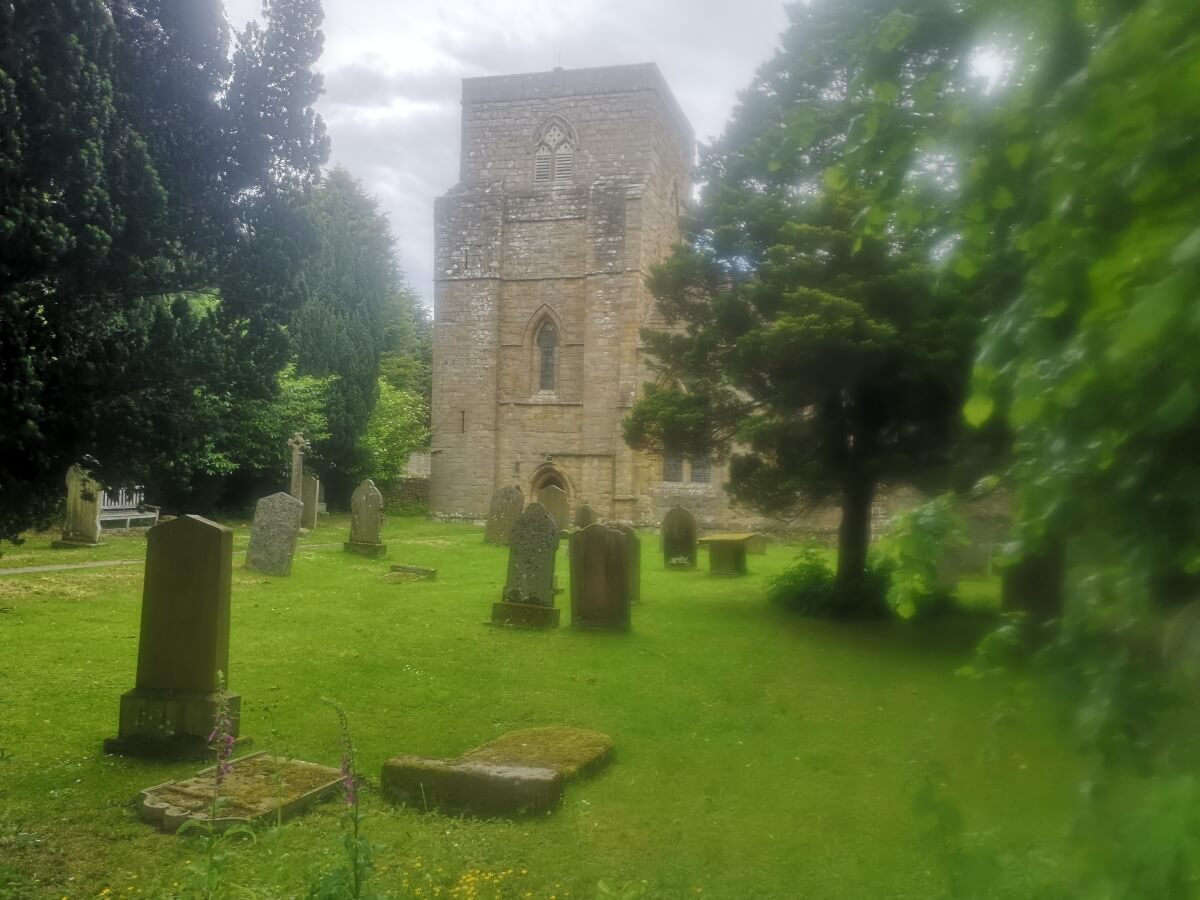
The church contains more clues. In the north transept, look down at the floor for several medieval grave slabs. One, decorated with a chalice and pastoral staff, is thought to have belonged to an abbot. Others depict huntsmen or foresters with horns.
Not everything that looks medieval actually is. The stone seats, or sedilia, on the south side of the choir are mainly Victorian restoration work, although some older stonework survives.
But perhaps the most surprising remains aren’t inside the church at all. They’re hiding in the Lord Crewe Arms, where parts of the medieval abbey became incorporated into the hotel.
From Abbey to Lord Crewe
After the Dissolution, Blanchland passed through several private owners before becoming part of the estates of the Forster family of Bamburgh in the 1620s. The Forsters moved into the former abbot’s lodging, part of which survives within the Lord Crewe Arms today.
By the beginning of the 18th century, however, the family was heavily in debt. In 1708, the Blanchland and Bamburgh estates were bought by Nathaniel Lord Crewe, Bishop of Durham, who had married Dorothy Forster.
When Lord Crewe died without heirs in 1721, his will established Lord Crewe’s Charity, which inherited Blanchland and still owns and manages the estate today.
That long ownership helped shape the village we see now. The early trustees repaired and rebuilt Blanchland while retaining its medieval layout, including restoring the ruined abbey choir for use as the parish church in 1752.
The Lord Crewe Arms
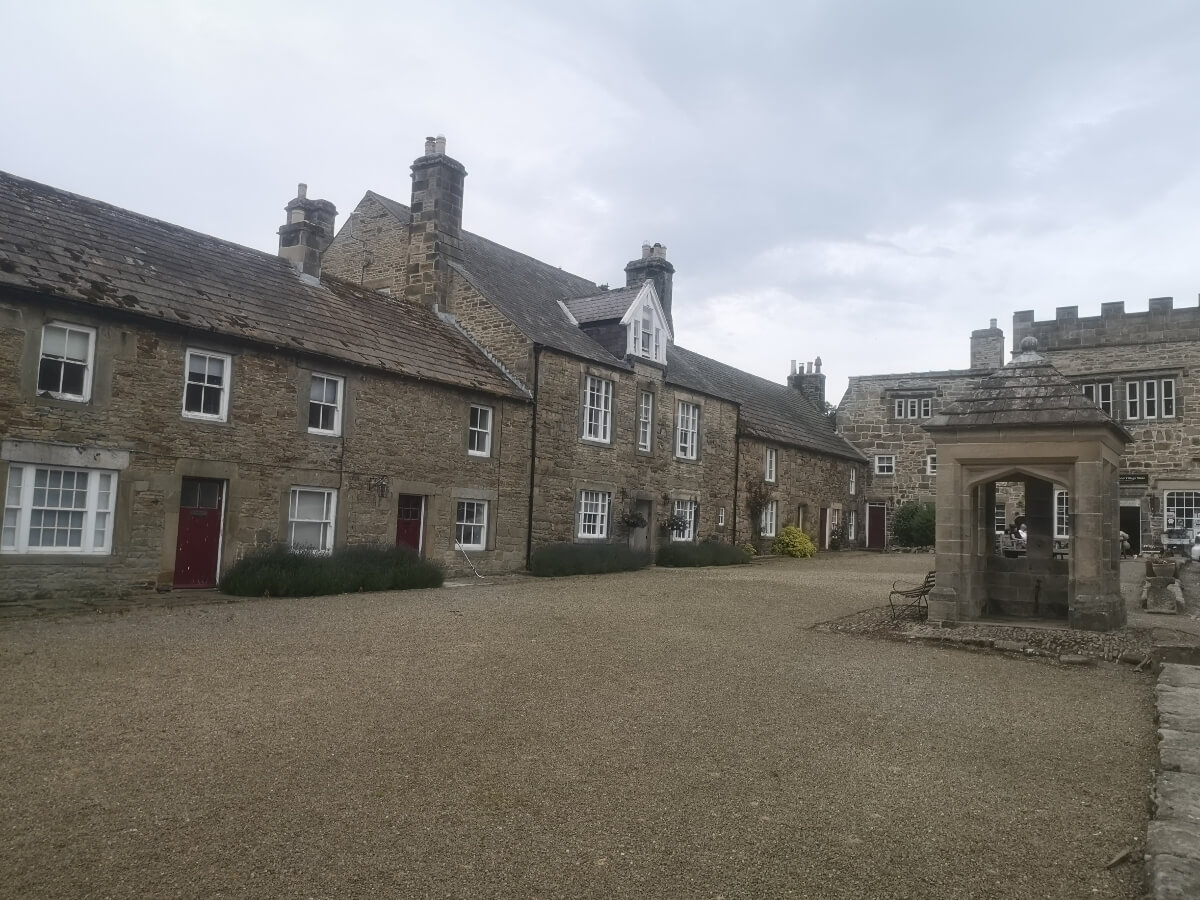
The Lord Crewe Arms isn’t simply somewhere to eat or stay in Blanchland. Parts of the hotel are built into the remains of the medieval abbey.
The section facing the main village street follows the canons’ west range, which once included the abbot’s house and guest accommodation. Today, the hotel’s main entrance and reception are on this side of the building, and even the front doorway incorporates reused medieval stonework.
Look for the medieval cloister in the garden
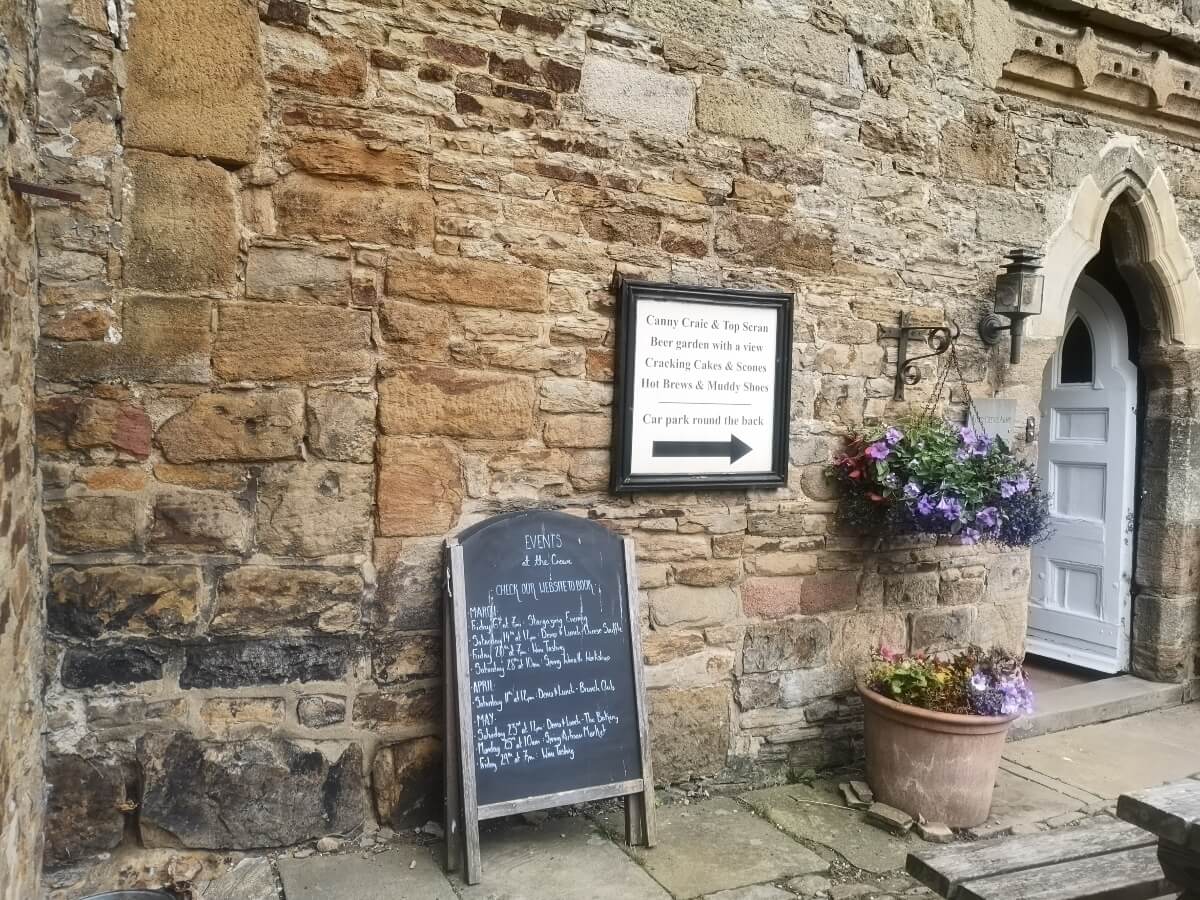
When we returned later, we parked behind the Lord Crewe Arms and walked through the garden into the village without realising we were crossing another part of the old abbey.
The lawn behind the hotel marks the site of the canons’ cloister. Beside it, an arched recess survives from the medieval buildings and was once part of the washing arrangements used by the canons before they entered the dining hall.
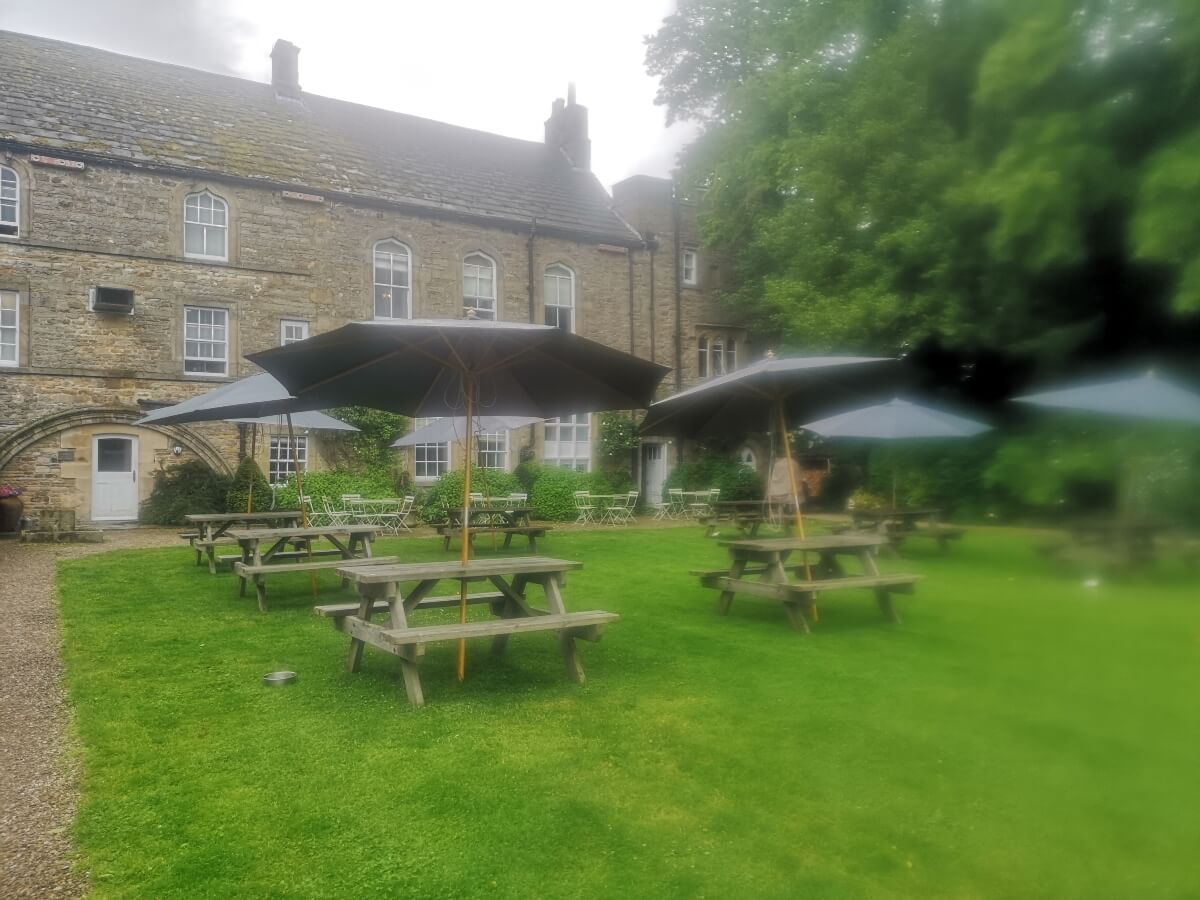
I love this because we’d walked straight past it without knowing what we were looking at. It was only afterwards, reading about the history of the estate, that I realised just how much of the medieval abbey is still hiding in plain sight.
Waiting in the Crypt Bar
After exploring the village, we headed back into the Lord Crewe Arms and waited in the Crypt Bar until our table was ready.
With its stone walls and vaulted ceiling, it’s a wonderfully atmospheric place for a drink. There was a wedding taking place that day too, and the wedding party were outside having photographs taken in the garden.
Which, knowing what I know now, means they were having their wedding photographs taken in the old cloister.
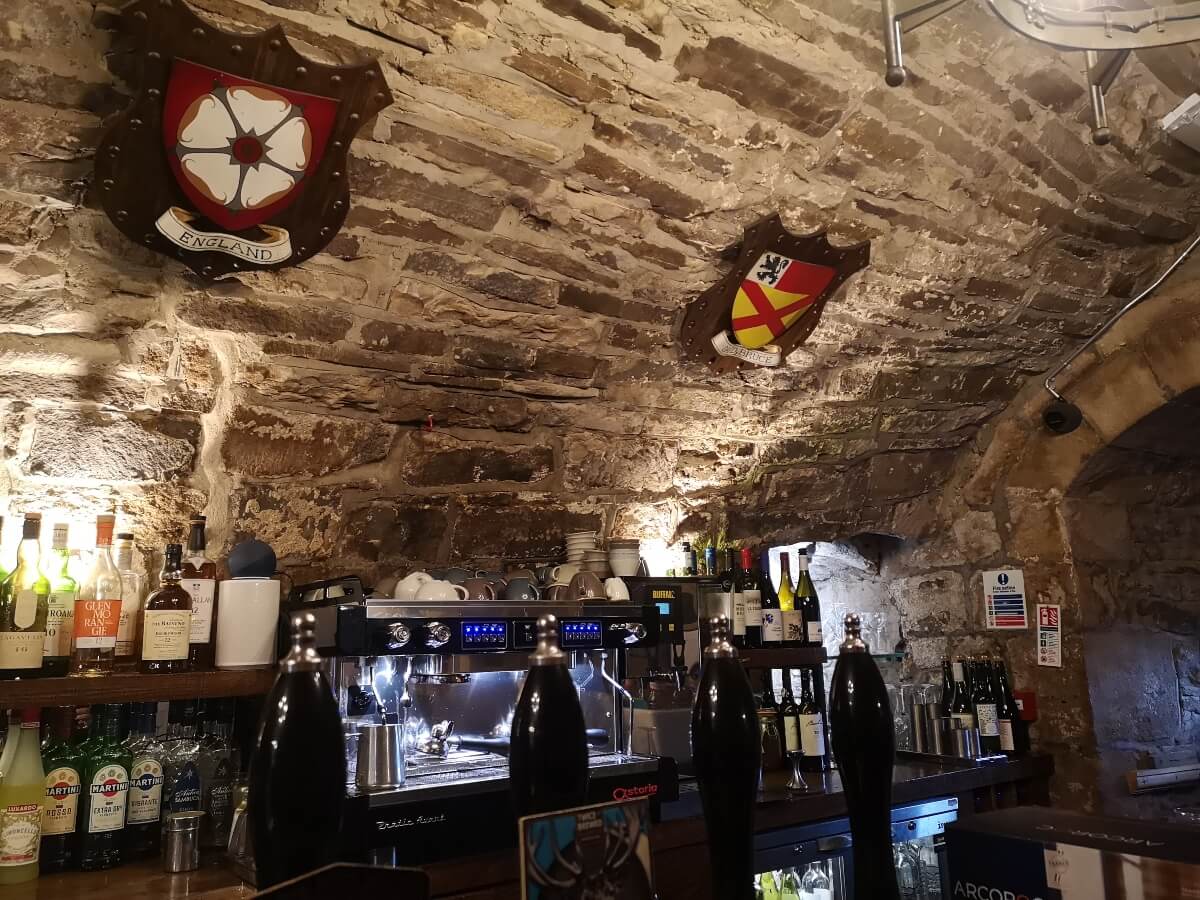
Then it was upstairs for our Father’s Day dinner.
Our Father’s Day Dinner at the Lord Crewe Arms
When our table was ready, the lady who’d been looking after us in the Crypt Bar took us upstairs to the restaurant. We were the first people in, so for a little while we had the room almost to ourselves.
The food was one of the reasons I’d wanted to visit the Lord Crewe Arms in the first place, and it was gorgeous. Everything was beautifully cooked, with lots of attention to detail. The portions didn’t look enormous when they arrived, but they were surprisingly filling.
I had the rare-breed pork with a cassoulet of beans, Rob chose the beef with pan haggerty, and Andrew had the lamb with a ratatouille-style accompaniment.
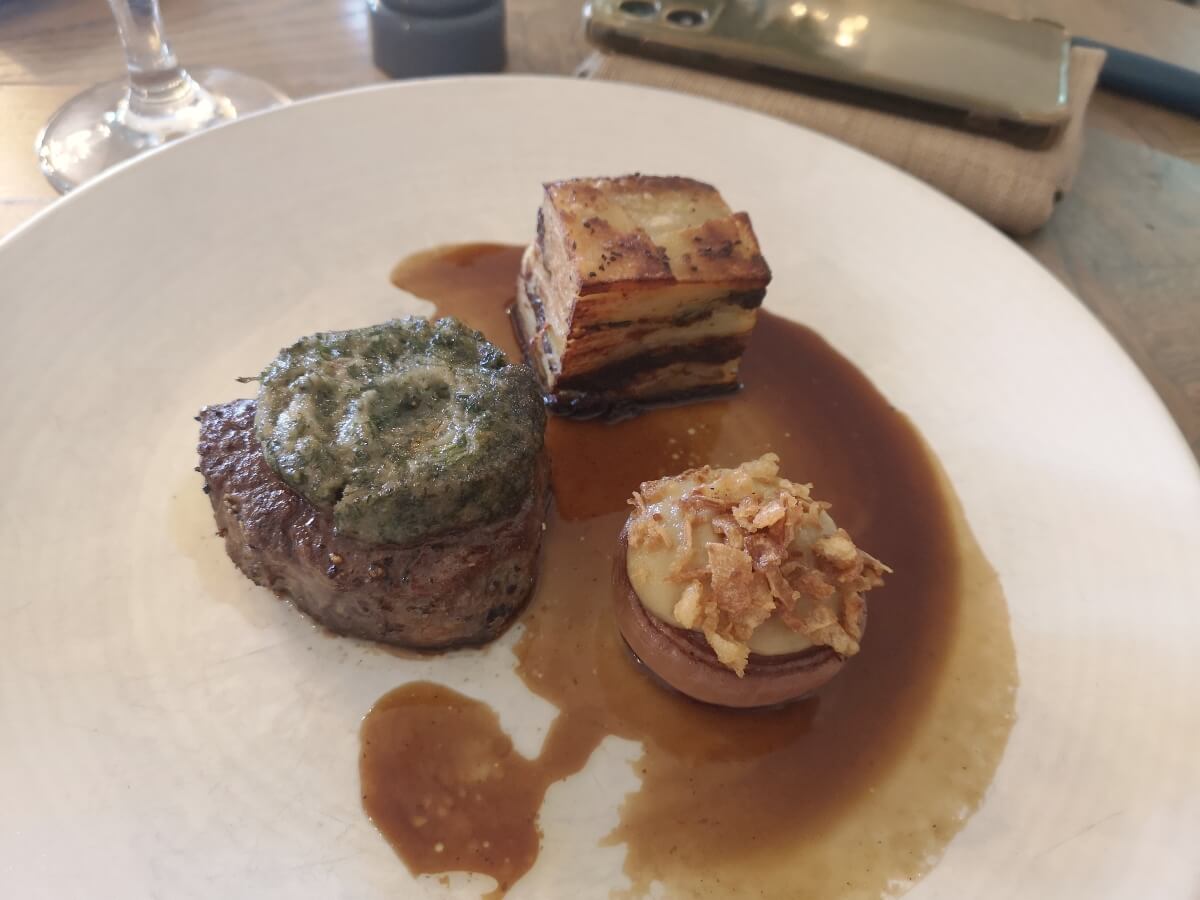
Seeing pan haggerty on the menu was particularly nice. It’s such a simple North East dish, made with layers of potatoes and onions, and one I’ve made many times at home.
We ordered chips for the table too. They were lush.
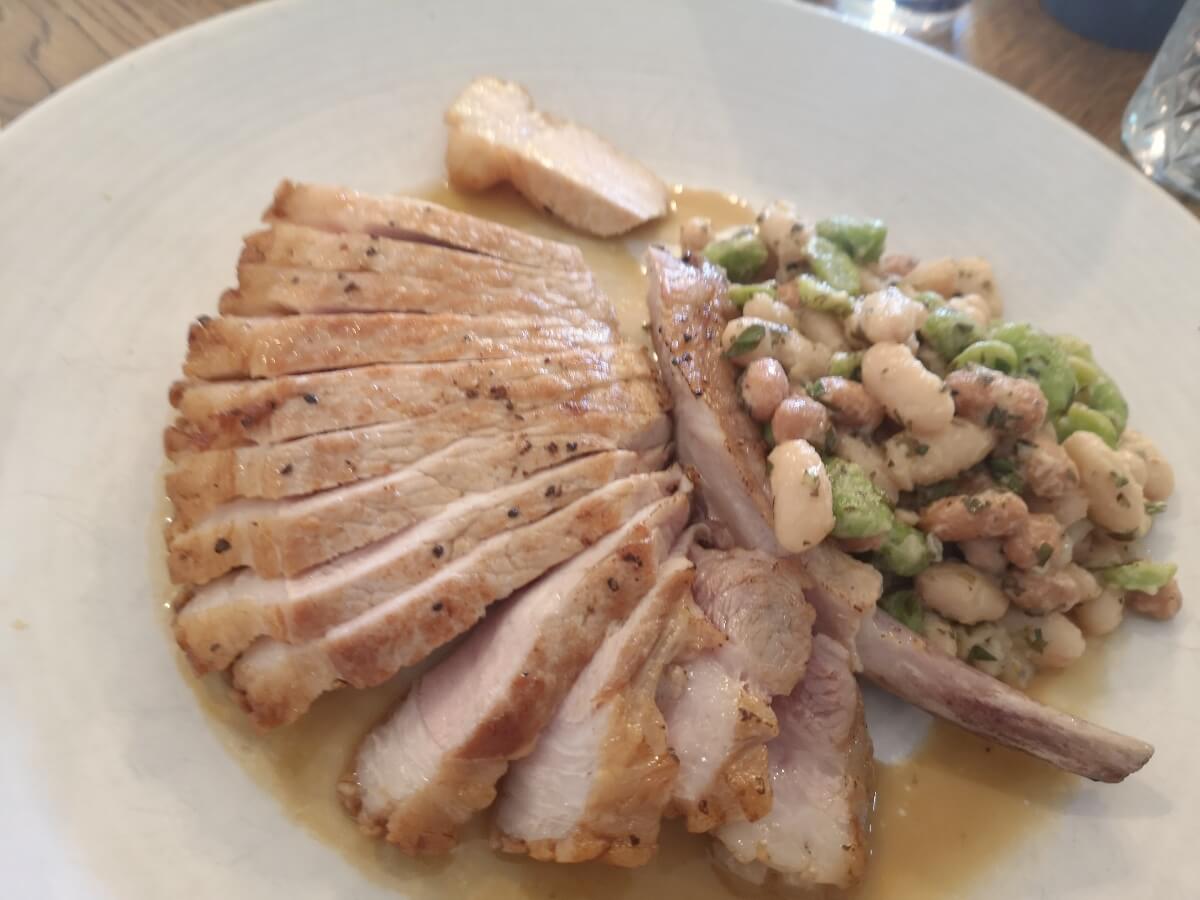
The menu changes with the seasons, with an emphasis on local ingredients and produce. It is a little more expensive than the sort of pub meal we’d normally choose, but the quality of the food, setting and attention to detail made it feel well worth it. I’d happily come back for a special occasion.
If you’re visiting with a dog, the downstairs dining areas at the Lord Crewe Arms are dog-friendly, so you don’t have to miss out. We ate upstairs in the Bishop’s Dining Room.
The staff were lovely throughout the evening, and one of them took a photograph of all of us together. It was a small thing, but particularly appreciated on a family occasion when someone usually ends up behind the camera.
By the end of dinner, I was already thinking we’d done Blanchland the wrong way round. We’d come for a meal and squeezed the village into the time around it. Next time, I’d be tempted to stay overnight and give ourselves much longer to explore.
Address: Lord Crewe Arms, The Square, Blanchland, Consett, DH8 9SP
Website: Lord Crewe Arms
Blanchland’s Lead-Mining Landscape
Blanchland may look peaceful today, but the surrounding moors were once a busy working landscape. Lead mining was an important part of life here during the 18th and 19th centuries, and traces of that industry can still be found around the estate.
Water played an important part in mining. Dams in the Ramshaw Valley fed waterwheels at nearby smelt mills, while a technique known as hushing used torrents of water to strip away the ground and expose veins of lead.
The lead ore, and later the smelted lead, had to be transported across the moors. Packhorse trains followed routes such as Carriers’ Way towards the Tyne. It must have been a very different landscape then, with the sound of packhorse bells carrying across the moor.
Mining was part of village life too. In 1851, 72 miners lived in Blanchland.
You can still spot traces of the industry in the landscape today, including old flues, chimneys and mining workings. Some of the old shafts are extremely deep, so keep out of fenced-off mining areas and stick to recognised paths.
You don’t need to understand the whole history of lead mining to enjoy Blanchland, but knowing it was here changes the landscape. Those quiet moors weren’t always quiet.
Walking Around Blanchland
Blanchland is a good place to explore on foot, and you don’t have to go far beyond the village before you’re out among the moors and woodland of the North Pennines.
The Blanchland Estate covers around 6,500 acres, much of it heather moorland, with miles of public footpaths and bridleways to explore. There’s plenty of scope for anything from a short wander beyond the village to a longer walk across the surrounding countryside.
One option is to follow the paths towards Baybridge. There’s also a 3.5-mile Blanchland Geotrail, which explores some of the geology and lead-mining heritage hidden in the landscape.
We didn’t have time for a proper walk on this visit, which is another reason I’d like to go back. Having discovered afterwards how much of Blanchland’s story extends beyond the village itself, next time I’d definitely bring the walking boots.
If you’re walking with a dog, check the restrictions for your chosen route before setting off. Much of the surrounding land is farmed or managed for wildlife, so dogs may need to be kept on leads or under close control.
And while you’re out there, keep an eye on the sky. The moors around Blanchland are home to some rather special birds.
Wildlife and Conservation Around Blanchland
The moorland surrounding Blanchland isn’t just beautiful scenery. It’s also an important habitat for upland wildlife.
Birds you may spot include curlew, lapwing, golden plover, oystercatcher and redshank, as well as red and black grouse. Even if you’re not a serious birdwatcher, the call of a curlew drifting across the moors is something worth listening for.
The estate forms part of the North Pennines National Landscape, with areas of the surrounding countryside protected for their habitats and wildlife.
For me, that’s another reason not to think of Blanchland as simply a pretty historic village. The buildings, farming, old mining landscape and wildlife are all part of the same story.
Practical Information for Visiting Blanchland
Where is Blanchland?
Blanchland is a small village in Northumberland, close to the County Durham border and surrounded by the North Pennines National Landscape.
How do I get to Blanchland?
Blanchland is easiest to reach by car. The roads become quite rural as you approach the village, so allow a little extra time for the journey rather than trusting your sat nav’s most optimistic estimate.
If you’re using a sat nav, navigate to Blanchland village rather than the Lord Crewe Arms unless you’re specifically visiting the hotel.
Where can I park in Blanchland?
There is a free village car park behind the White Monk Tea Room, with a smaller car park behind the Village Hall. Donation boxes help towards the upkeep of the parking areas.
If you’re visiting the Lord Crewe Arms, the hotel has its own parking behind the building. That’s where we parked when we returned for dinner.
Are there public toilets?
Yes, public toilets are available in Blanchland.
Can I bring my dog?
Yes, but remember that the countryside around Blanchland is a working rural landscape with livestock and important wildlife habitats. Check the guidance for your particular walking route and keep dogs under close control where required.
If you’re eating at the Lord Crewe Arms, dog-friendly dining is available downstairs in The Hilyard and The Derwent.
Can I get to Blanchland by public transport?
Public transport to such a rural village is limited. There is a bus service connecting Blanchland with Consett, but services are infrequent, so check the current timetable before planning your journey.
How long should I spend in Blanchland?
You can wander around the village itself quite quickly, but I’d allow longer.
Give yourself time to explore the abbey and look for the remains of the medieval layout, stop for something to eat or drink and, if you enjoy walking, head out onto one of the surrounding paths.
We tried to fit Blanchland around our dinner reservation. Next time, I’d do the opposite.
Things to Do Near Blanchland
If you have more time, Derwent Reservoir is only a short distance from Blanchland and is an easy addition to a day exploring this part of the North Pennines. It’s a good option if you want to combine the historic village with more time outdoors.
Derwent Reservoir has an unexpected place in our family history too. For years we’d had photographs of ourselves beside a mystery reservoir when Andrew was about seven. We thought it must have been Kielder, until a later visit proved us wrong.
Eventually, we worked out that our mystery reservoir was Derwent.
Hexham is another possibility if you’re exploring the area. We made a quick detour there before our dinner, although I’d give it considerably more time if you’re planning to visit properly.
Is Blanchland Worth Visiting?
Yes, especially if you enjoy historic villages, old buildings and walking.
Blanchland is small, but there’s much more here than you might expect. Once you realise the village square follows the layout of a medieval abbey, parts of the Lord Crewe Arms incorporate its buildings and the surrounding moors hide traces of centuries of lead mining, it becomes somewhere to explore rather than simply somewhere pretty to photograph.
Join my newsletter and get your free weekend break packing list
We Need to Go Back
We originally came to Blanchland because Andrew had booked our Father’s Day dinner at the Lord Crewe Arms. Food was what put the village on my radar at Living North LIVE in the first place, so in a way it brought the whole story full circle.
But we did Blanchland backwards.
We fitted our exploring around dinner when really I could happily have spent much longer here. I want to walk out onto the moors, look properly around the abbey, find the old gatehouse and some of those medieval grave slabs, and see how much of the old monastic layout I can recognise now that I know what I’m looking for.
Next time, I think we’ll stay over.
And I’ll bring my walking boots.


