
Traditional North East England Food & Classic Geordie Dishes
Traditional North East England food is hearty, practical and full of character, shaped by the landscape and history of the region. From the Scottish Borders to the North Pennines and the Northumberland coast, families made the most of local ingredients. They created simple, filling meals that people still enjoy today.
If you’re wondering what food is local to North East England, you’ll find plenty of hearty, traditional recipes made from simple ingredients. Potatoes, onions, leeks, pork and fresh bread appear time and again. Together, they created affordable meals that fed generations of miners, shipbuilders, farming families and fishing communities.
Discover Traditional North East Recipes
From stottie cake and pease pudding to pan haggerty and Northumberland ham broth, these recipes are part of the North East’s story. This guide brings together some of the region’s best-loved dishes. It explains what makes them special and links to step-by-step recipes you can cook at home. As the Living Archive grows, this guide will continue to connect these recipes with the places, traditions and memories that shaped them.
Whether you grew up in the North East, are planning a visit or simply enjoy traditional home cooking, there’s plenty to discover below.
Popular North East recipes:
How North East Food Developed
North East England has a long tradition of making the most of local ingredients. Families cooked with whatever was available, whether it came from the allotment, the farm, the coast or the local butcher. Meals needed to be affordable, filling and satisfying enough to feed people doing physically demanding work.
This practical approach to cooking shaped many of the region’s best-known dishes. Pork was often the most affordable meat, while families grew potatoes, onions and leeks in gardens and allotments across the North East. Bread such as the stottie became the perfect way to turn simple fillings into a substantial meal.
Although recipes varied from one town to another, they all shared the same idea of making the most of what was available. Many of these traditional dishes are still enjoyed today and continue to tell the story of the North East through its food.

What Makes North East England Food Unique
North East England’s traditional recipes transform simple ingredients into satisfying meals. Many traditional recipes use potatoes, onions, leeks, split peas and pork, turning everyday ingredients into meals that have stood the test of time.
The North East is home to distinctive dishes that are difficult to find elsewhere. Stottie cake, pease pudding, pan haggerty, singing hinnies and Northumberland ham broth have all become symbols of North East food heritage, each with its own story to tell.
Although modern tastes have changed, these recipes remain an important part of the region’s identity. Families still cook them at home, cafés proudly serve them, and food festivals celebrate them, helping to keep North East food traditions alive for future generations.
Ready to try some traditional North East cooking? Start with a few of the region’s best-loved recipes below, or download my free Cook Like a Geordie recipe book for even more inspiration.

FREE NORTH EAST RECIPE BOOK
Cook Like a Geordie
Love traditional North East flavours? Start cooking some of the region’s best-loved recipes. This free recipe book brings together hearty broths, comforting bakes and traditional favourites that are simple to make and full of North East flavour.
Sign up now to get your copy and start cooking like a true Geordie!
North East England Recipes
Whether you’re looking for a simple lunch, a hearty family meal or a traditional North East bake, you’ll find plenty of recipes to explore here. I’ve grouped them into starters and sides, mains and sweet dishes to help you find what you’re looking for.
Starters and Sides
Many traditional North East starters and side dishes were simple, affordable and designed to make a meal go further. Whether served alongside a family dinner or enjoyed on their own for lunch, they’re still favourites that are easy to make at home.
Canal Floddies
Floddies, the Geordie version of potato cakes, make a delicious breakfast. Navies, who were working to dig out canals or metro tunnels, would often make them. They are so simple to make that you can cook them on a shovel over a fire.
They are great on their own or why not add them to a full English breakfast for a great start to the day?


Stotties
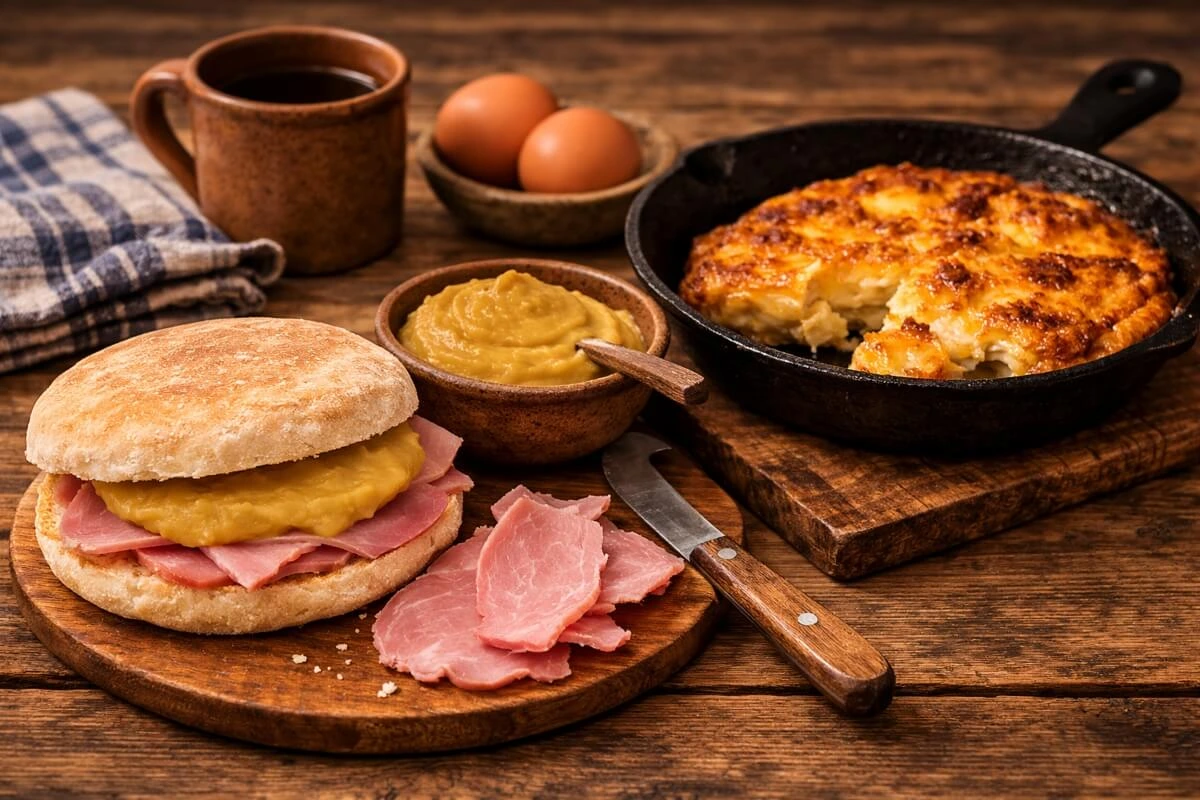
The stottie cake is one of the North East’s most recognisable foods. This large, round bread has a soft, chewy texture that makes it perfect for hearty sandwiches, especially the classic combination of ham and pease pudding.
Despite its reputation, a traditional stottie is surprisingly simple to make. With just one rise and a slow bake at the bottom of the oven, it’s an enjoyable bread for home bakers and a delicious way to bring a taste of the North East to your table.
Perfect with: Cheese Savoury • Ham & Pease Pudding
Cheese savoury sandwiches
Cheese savoury is a North East lunchtime favourite made with grated cheese, carrot, onion and mayonnaise. Its creamy texture and gentle tang make it the perfect filling for a freshly baked stottie, although it’s just as delicious in sandwiches and bread rolls.
Quick to make and full of flavour, it’s a simple recipe that’s stood the test of time.
Perfect in: Stottie Cake

Pease pudding
Every Geordie is familiar with pease pudding. Made from yellow split peas, pease pudding is a smooth, comforting dish that pairs perfectly with ham in a freshly baked stottie.
Traditionally, the split peas were tied in a muslin bag and cooked alongside the ham. It was a practical way to cook both together in a single pot over the fire, making the most of the day’s cooking.
Although it’s made with just a few simple ingredients, pease pudding has a rich, savoury flavour that has earned its place as one of the North East’s best-loved dishes.
Perfect with: Stottie Cake • Ham

Saveloy Dip
Pease pudding also features in another North East favourite, the saveloy dip. This hearty sandwich combines a soft white bun with pease pudding, a beech-smoked saveloy sausage, sage and onion stuffing, a touch of mustard and plenty of hot gravy. It’s another delicious way to enjoy this North East classic.
Northumberland Ham broth
Northumberland ham broth is one of the North East’s most comforting traditional meals. Made with ham, yellow split peas, red lentils and root vegetables, it’s a hearty soup that has warmed families for generations.
Like many traditional recipes, ham broth makes the most of simple ingredients. The ham creates a rich stock while the vegetables and pulses turn it into a filling one-pot meal that’s perfect for chilly days.
Ham and Split Pea Soup
If you’re looking for a simpler way to use up leftover ham, this ham and split pea soup is a great choice. Made with split peas and a rich ham stock, it’s an easy, comforting meal that’s sure to become a family favourite.

Whitley goose
Despite its name, Whitley Goose contains no goose at all. This traditional baked onion dish combines onions, cheese and cream or milk to create a rich, comforting side dish. Closely associated with Whitley Bay, it was already being described as “an excellent old country recipe” in 1953, making it one of the North East’s lesser-known culinary traditions.
Perfect alongside a traditional roast dinner.


Pan Haggerty
Pan Haggerty is a traditional North East potato dish that combines layers of potatoes, onions and cheese. Slow cooking gives it a crisp, golden base and a wonderfully cheesy middle, making it a hearty side dish or a satisfying meal in its own right.
Perfect with: Sausages, Roast Beef, Ham
Carlin Peas
Carlin Peas are a traditional North East dish made from black peas. Long associated with local customs and celebrations, they remain one of the region’s lesser-known but enduring food traditions.
Mains
North East main meals are hearty, comforting and filling. Some recipes make the most of simple, affordable ingredients or leftover meat, while others have become closely associated with particular towns and communities across the region.
Alnwick Stew
Alnwick Stew is a traditional Northumberland one-pot dish that slowly cooks layers of gammon, onions and potatoes into a rich, comforting meal. Closely associated with the historic market town of Alnwick, the recipe is thought to have originated at Alnwick Castle, home of the Percy family, Dukes of Northumberland.
Perfect with: Stottie Cake


Panaculty or Panackelty
Panackelty, sometimes spelled Panacalty, is a traditional North East one-pot meal that makes the most of leftover Sunday roast. Traditionally cooked on a Monday, layers of potatoes, onions, root vegetables and leftover roast beef are slow cooked together in rich gravy to create the ultimate comfort food.

Leek pudding
Leek pudding is a traditional North East dish that reflects the region’s long association with growing prize leeks. Many Geordie families grew leeks on their allotments, and the tradition of exhibiting prize leeks became especially strong in the mining communities, where pitmen spent their spare time tending their gardens and competing at local shows.
As well as providing friendly rivalry, growing leeks helped put food on the table, and leek pudding became a delicious way to make the most of a home-grown harvest. Serve it with white sauce or alongside a Sunday roast.
Perfect with: Roast Beef, Roast Chicken, Ham

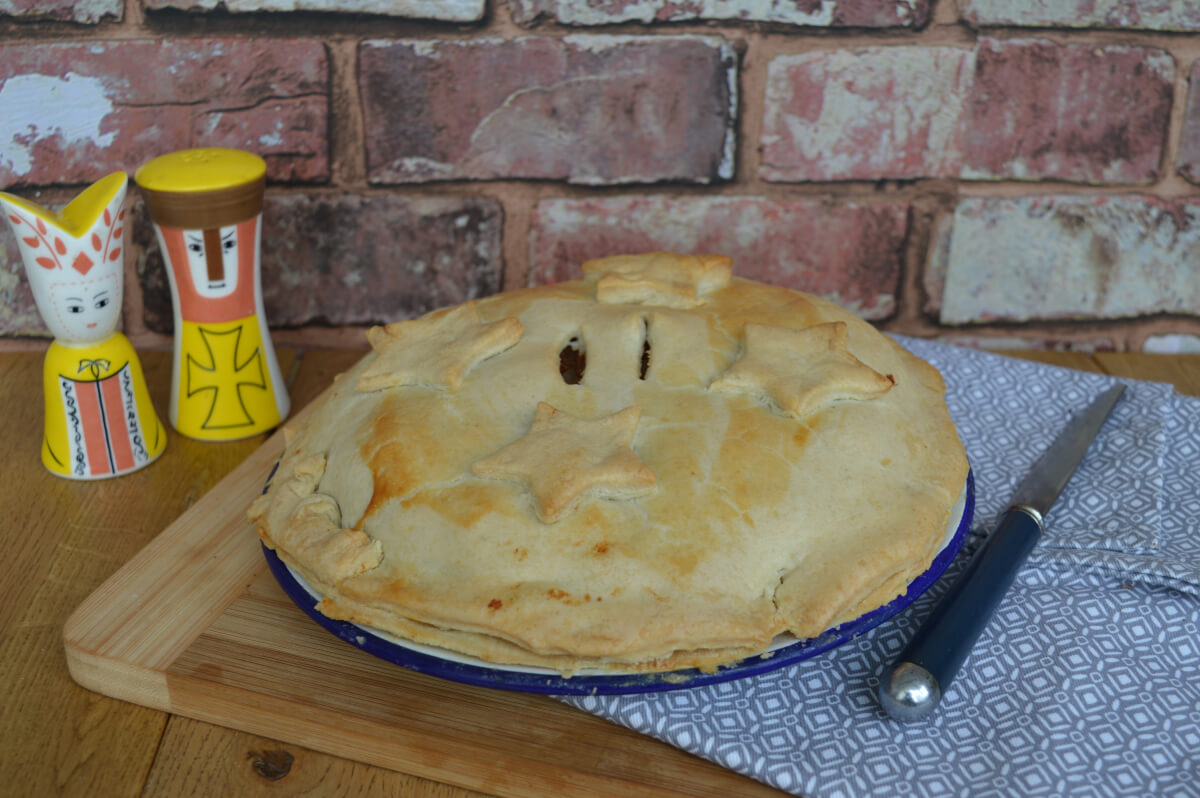
Corned Beef and Potato Pie
Once you’ve tried this Corned Beef and Potato Pie, you’ll have a new family favourite. Rich, comforting and easy to make, it’s perfect for a warming dinner on a cold day. It’s equally delicious served cold for lunch or packed into a picnic.

Turkey and ham pie
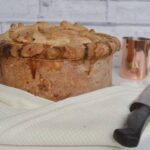
North East cooking isn’t just about hearty everyday meals. The region’s great country houses also produced impressive dishes for entertaining, with richly filled pies taking pride of place on Victorian and Edwardian tables. This traditional turkey and ham pie comes from Wallington Hall, the National Trust estate near Morpeth, and offers a taste of that culinary heritage.
Find out more about visiting Wallington Hall and discover the history behind this beautiful National Trust estate.
Sweet dishes
Hearty meals may have filled hungry stomachs, but there’s always room for something sweet. North East England has a wonderful tradition of cakes, bakes and puddings, from comforting suet desserts served with custard to fruit-filled treats enjoyed with an afternoon cup of tea or tucked into a lunch box.
Sly cakes
Sly Cakes are a traditional North East pastry filled with a rich mixture of dried fruit and spices. Perfect for a lunch box or an afternoon treat, they’re as interesting for their unusual name as they are for their delicious filling. Discover the recipe and the story behind it.

Felton spice loaf
Although the exact origins of spice loaf are uncertain, it has long been a favourite teatime treat across Britain. Every region has its own variation, and Felton Spice Loaf is Northumberland’s version. Packed with dried fruit and warming spices such as cinnamon, cloves, allspice and ginger, it’s the perfect slice to enjoy with a cup of tea.
Singing hinnies
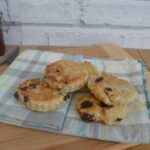
Singing Hinnies are the North East’s answer to griddle cakes or fried scones. Traditionally cooked on a hot griddle, they earned their unusual name from the singing or sizzling sound they make as they cook. Serve warm with butter and jam for a simple but delicious treat.
Newcastle brown ale fruit cake
Fruit cake has been part of celebrations for centuries, from Christmas and weddings to christenings and family gatherings. This North East version uses Newcastle Brown Ale to create a wonderfully rich, moist fruit cake with a distinctive local twist that’s well worth trying.

Lardy cake
Lardy Cake is a traditional sweet tea bread that combines lard, dried fruit and gentle spices to create its wonderfully soft texture and rich flavour. It’s a delicious treat to enjoy with a cup of tea or to share on special occasions.

Newcastle pudding
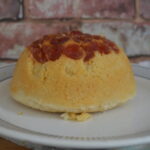
Newcastle Pudding is a traditional steamed vanilla sponge topped with cherries. Serve it warm with plenty of custard for a light, comforting dessert that’s perfect on a chilly autumn day.
North East England Region
The North East of England stretches from the Scottish border in the north to the River Tees in the south. It is a region of dramatic contrasts, from the wild beauty of Northumberland National Park and the rounded Cheviot Hills to the remote North Pennines. Hadrian’s Wall cuts across the landscape, a reminder of nearly two thousand years of history. Today, the silence is often broken only by the whistle of farmers gathering sheep from the hills.
It is a land shaped by centuries of conflict. Castles still stand proudly across the countryside, recalling the days when Border Reivers rode across the frontier without warning. Along the coast, wind-worn fortresses overlook golden beaches, while Holy Island, reached only at low tide, tells the story of the monks who endured Viking raids before becoming one of England’s most important pilgrimage sites.
The city of Newcastle upon Tyne is the vibrant heart of the region. Built along the River Tyne, its handsome Victorian buildings reflect the city’s industrial past. Newcastle was once a centre for coal mining, shipbuilding, engineering and the railways, industries that helped shape both the landscape and the food of the North East.
Yet it wasn’t only the city that influenced the region’s cooking. Farming, fishing and rural communities all played their part. Across the North East, families learned to make the most of local ingredients, creating hearty everyday meals alongside recipes served in the great country houses and estates of Northumberland and County Durham.

Regional Food and Drink
The North East is home to many iconic foods and drinks. Craster kippers have been traditionally smoked for generations, Lindisfarne Mead is still produced on Holy Island, and Newcastle Brown Ale has become one of the region’s most recognisable exports. Even Earl Grey tea has North East roots through Charles Grey, the 2nd Earl Grey, whose family home was Howick Hall in Northumberland.
Whether it’s a simple bowl of ham broth, a slice of stottie cake or a rich fruit cake made with Newcastle Brown Ale, the region’s recipes tell the story of the people who lived and worked here.

Preserving North East Food Heritage
These recipes are more than family favourites. They are part of the North East’s history, passed down through generations and still enjoyed today. From everyday comfort food to celebration bakes, each recipe helps preserve a small piece of the region’s heritage.
Have you tried any of these North East recipes? I’d love to know which ones are your favourites.
If there’s a traditional North East dish you think should be included, let me know in the comments. Every family has its own treasured recipes, and I’d love to help preserve more of our region’s food heritage.
FAQs about North East Food
The North East of England is famous for hearty traditional dishes including stottie cake, pease pudding, pan haggerty, panackelty, singing hinnies and Northumberland ham broth. It also produces regional favourites such as Craster kippers, Newcastle Brown Ale and Lindisfarne Mead.
Traditional Geordie food refers to the classic dishes associated with Newcastle upon Tyne and the surrounding North East. Favourite recipes include stottie cake, pease pudding, ham broth and panackelty.
A stottie is a large, round flat bread traditionally baked in the North East of England. Many people fill it with ham and pease pudding to make a classic Geordie sandwich.
Pease pudding is a traditional North East dish made from split yellow peas that are slow cooked until soft and smooth. It is commonly served with ham or spread inside a stottie sandwich.
Pan Haggerty is a traditional North East potato dish that combines layers of potatoes, onions and cheese, slowly cooked until golden and tender.
Panackelty is a traditional North East one-pot meal that combines potatoes, onions and leftover roast beef, slowly simmered in rich gravy. Families traditionally cooked it on Mondays to make the most of Sunday’s leftovers.
Traditional North East desserts include singing hinnies, Newcastle pudding, sly cakes, Felton spice loaf, lardy cake and Newcastle Brown Ale fruit cake
Pin for Later
If You Enjoyed This Guide
Continue exploring North East food heritage with these traditional recipes and collections:
- Traditional Cheese Savoury – a classic North East sandwich filling.
- Northumberland Ham Broth – a hearty soup traditionally made with ham, split peas and root vegetables.
- Traditional Stottie Cake – bake the North East’s famous flat loaf at home.
- Pan Haggerty – layers of potatoes, onions and cheese cooked until golden.
- Corned Beef and Potato Pie – a comforting family favourite found across the North East.
Traditional Pease Pudding – the perfect partner for ham and stottie cake.




This all brings back so many memories. I had forgotten about Sly cakes completely.
I am making a Cornbeef & potatoe pie to try and recreate my mums, which I suspect my husband will say is no match for hers. He is Scottish but loved mums pie.
I hope your pie turned out delicious!
So glad to have found this site!
My childhood consisted of several yearly trips from Devon, where my geordie parents had settled in 1960, eating these dishes baked by my grandmother!
She always baked on a Friday to feed us on the Saturday
Sly cake and corned beef were the highlight.
My other grandmother baked amazing stotties on the bottom oven, generally before the main bread went in or after, when the oven was less hot.
One treat I remember but have never found reference to is Carlin peas, and a day called Carlin Sunday when the peas were cooked and laced with sugar and whiskey…..any ideas?
Also drop scones cooked on a griddle for teatime on Sunday…..
I have saved your site so I can revisit later and try some of the recipes I can’t remember eating
I still make the soup myself but haven’t kept the habit of cooking pease pudding along side in the pan of bacon
Thank you for sharing those memories. I have heard of Carlin peas but I don’t know much more than that. I will see what I can find out.
Drop scones, I had forgotten about those. Will have to give them a try.
My grandma comes from here as well, and she misses the north a lot. So, every time we visit her, we have Parkin (spiced bready cakey thing that’s nice with butter) – she says it’s a northern food, but I’ve only ever had it at her house. Do you know where it comes from? Thanks <3
Parkin is a Yorkshire recipe, my grandparents were from there and used to have it all the time
I’m trying to find a baked dish served with a Sunday roast that my mother used to make.
It was made in a shallow baking dish and I think it consisted mainly of suet and flour.
I remember it being golden and crispy on the top and I know she always poured off excess fat and then put it back in the oven for several minutes.
Would love to know if anyone can help
It might be suet pudding, I have heard of dishes with suet, flour, water or milk being baked in a dish but have never tried it
My Mother used to make sly cake every Saturday when she used all the trimmings of pastry up after baking for the week. She would roll out the pastry spread jam on the bottom and add lots raisins and small dollops of butter ,top with pastry and wash the edges with egg and milk wash and seal with a fork. Lastly brush with egg and milk wash and sprinkle with sugar.Cook until golden, and sometimes we would eat it hot with custard. Yum, i have made this so many times but i am unable to match my Mother’s Sly cake.
The jam sounds like a lovely addition!